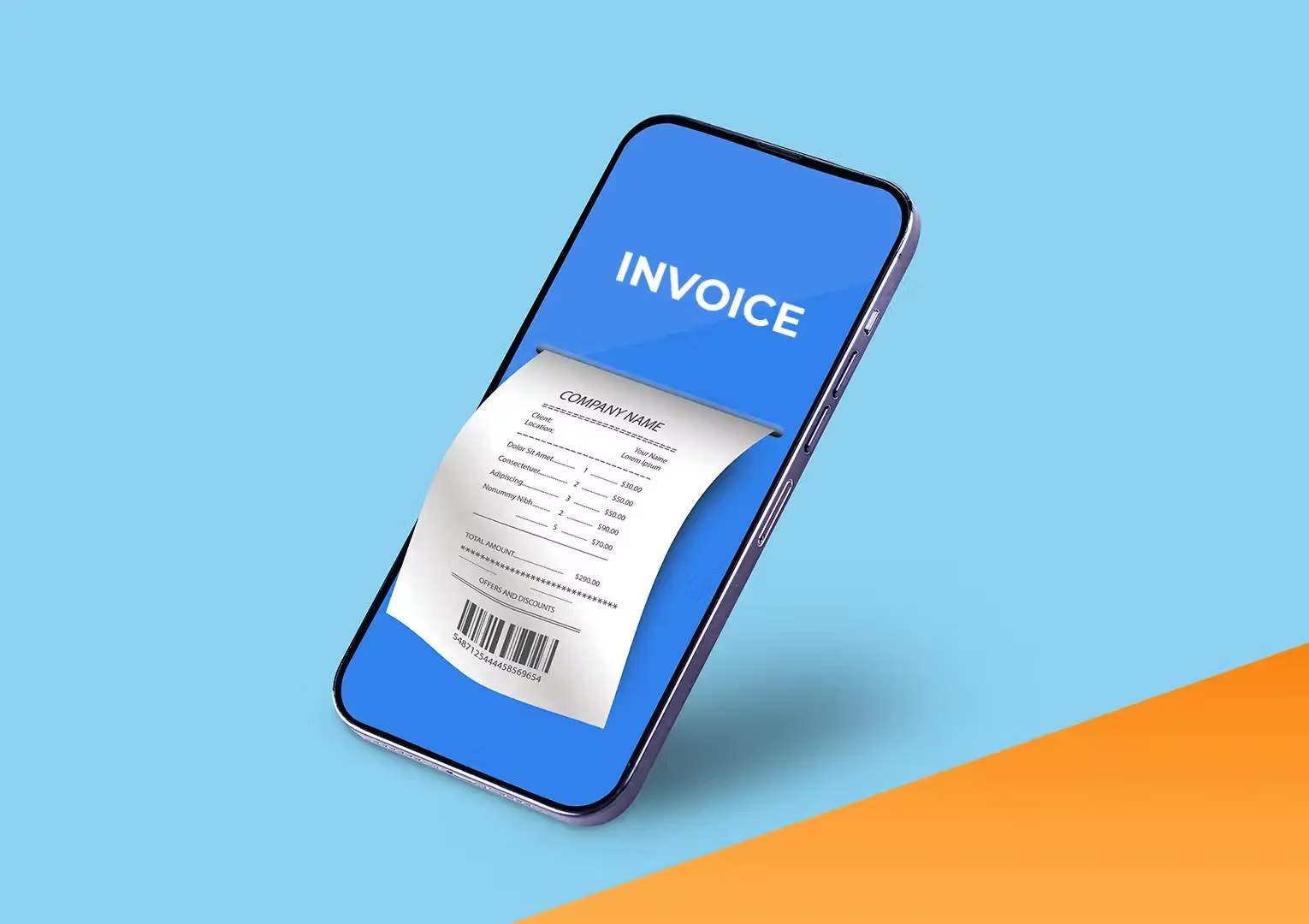
Whatever the type and size of your company, invoices play an important role in the accounting process to help your company track and collect payments from customers. So, in this article Labamu will invite you to discuss in more depth what an invoice is, its uses and types. Come on, take a look!
What is an Invoice?
Quoting the Investopedia page, an invoice is an official document that details and records transactions between sellers and buyers. This document usually contains transaction terms and provides information regarding available payment methods.
In the past, invoices were recorded on paper and made in several copies so that the seller and buyer each had a record of the transaction. However, now invoices can be printed or sent via e-mail.
This electronic form allows you to search, sort and track transactions more easily and quickly.
Invoice Function

Sellers can send invoices to buyers to collect payment. However, an invoice is a legally binding agreement and shows that both parties have agreed to the price and payment terms stated. However, apart from that there are other benefits of invoices. The following is the explanation.
1. Keep Transaction Records
The most important benefit of an invoice is that it serves as a valid sales record. This helps companies to know when the goods/services were provided, who the buyers were, and what the transaction amount was.
2. Track Payment Status
Apart from that, invoices are also valuable documents for accounting people. This helps them track payment status and amounts owed (receivable) by the company.
3. Provide Legal Protection
An invoice is legal evidence to show the agreement between the seller and the buyer regarding goods/services as well as the price and payment terms. Ini melindungi penjual dari tuntutan hukum yang bersifat penipuan sekaligus membantu penjual mendapatkan hak atas kewajiban yang telah mereka penuhi.
4. Helping File Tax Records
Recording and archiving invoices helps companies report income and ensure that the amount of tax paid is the amount it should be.
5. Becomes a business analysis tool
Analyzing invoices can help businesses gather information on customer purchasing patterns and identify trends, best-selling products, peak purchasing times, and more. This helps you develop an effective marketing strategy.
Types of Invoices
You might think that all invoices are the same. Functionally, they may be the same, but there are many types of invoices that have different uses. The following are the most widely used invoice types.
1. Sales Invoice
This is the most frequently used standard invoice type. The sales invoice outlines the goods/services provided and the fees that must be paid to the provider company. Keep in mind that this document usually also includes payment terms that the customer must comply with.
2. Proforma Invoice
Some customers may require cost projections before starting cooperation or agreeing to purchasing terms. In this case, the seller can send a proforma invoice to provide transaction details and conditions. This type of invoice is usually signed by the customer as an agreement to the terms and a signal to continue the project.
3. Interim Invoice
Interim invoices or temporary invoices are usually used in transactions where payments are made in installments. For example, for projects that are large in scope or long term in nature. In this context, the seller will send interim invoices in stages to receive payment while trying to complete all obligations to the customer.
4. Final Invoice
Final invoice is an invoice issued when the seller has completed the project or fulfilled the order. This invoice is actually similar to a proforma invoice and sales invoice, but usually contains additional details about the final results of the project being carried out.
5. Commercial Invoice
Commercial invoices are usually used for foreign trade as customs declarations in the sale of goods exported across international borders.
6. Timesheet Invoice
A timesheet invoice is a billing document whose costs are calculated based on the number of employee hours spent on the project. This type of invoice can provide other benefits for companies, such as tracking the working hours needed to complete projects as well as making efforts that can increase employee productivity.
7. Recurring Invoice
Recurring invoices are used for customers who order the same product or service consistently over time, such as subscription fees. You can send them periodically without needing to change information about products/services and those related to clients.
8. Overdue Invoice
Unfortunately, not all customers pay invoices on time, even though the payment terms have been stated clearly and professionally. In the case of overdue payments, companies will usually issue an overdue invoice to remind customers that they have not completed their payment obligations. These typically include late fees, options for payment plans, or debt collection actions.
9. Credit Notes
Credit notes are a type of invoice issued when there are differences, damage or errors in delivery of goods. This could occur due to an error when issuing an invoice, loss of goods during delivery, damaged goods, cancellation of purchase, or other reasons.
Also read: 15 Promising Businesses in 2025 with Big Profits
Elements in Invoice

A good and legally valid invoice contains the information the customer needs to make the payment and explains the terms. These are the various elements that must be included in the invoice.
1. Invoice Title
The word “Invoice” or its equivalent as well as the company logo must be clearly visible on the document so that it is easily recognized.
2. Invoice Number
Each invoice must have a unique identifier such as an invoice number, purchase order number, or reference number to distinguish it from other seller invoices.
3. Important Dates
The dates that must be included in the invoice are:
- The date the goods or services were provided to the customer.
- Invoice sending date.
- Payment due date.
4. Contact Seller and Buyer
The invoice must also clearly state the names of the seller and buyer as well as any required contact information. This makes it easier for each party to contact each other if there are questions or issues that need to be resolved.
5. Product/Service Details and Prices
The invoice must explain each product or type of service provided along with the total costs to be paid. Usually, invoices add special columns to describe quantity details, price per item, total costs, and total to be paid. It would be good if you also wrote it in spelled form for verification.
6. Tax Rates and Discounts
If the payment is subject to tax or has a discount, this information must also be included in detail on the invoice.
7. Payment Terms and Conditions
A good invoice also needs to include the payment terms and conditions that the company expects to receive payment, including the remittance period (due date), payment method, imposition of fines, and other provisions.
That’s an explanation of what an invoice is and everything you need to know. Thankfully, in today’s digital era, there are many conveniences in doing business that you can get. One way is by using the Labamu application which can accommodate all transaction recording and business administration needs, including creating invoices. Come on, download the application immediately via Google Play or the App Store!