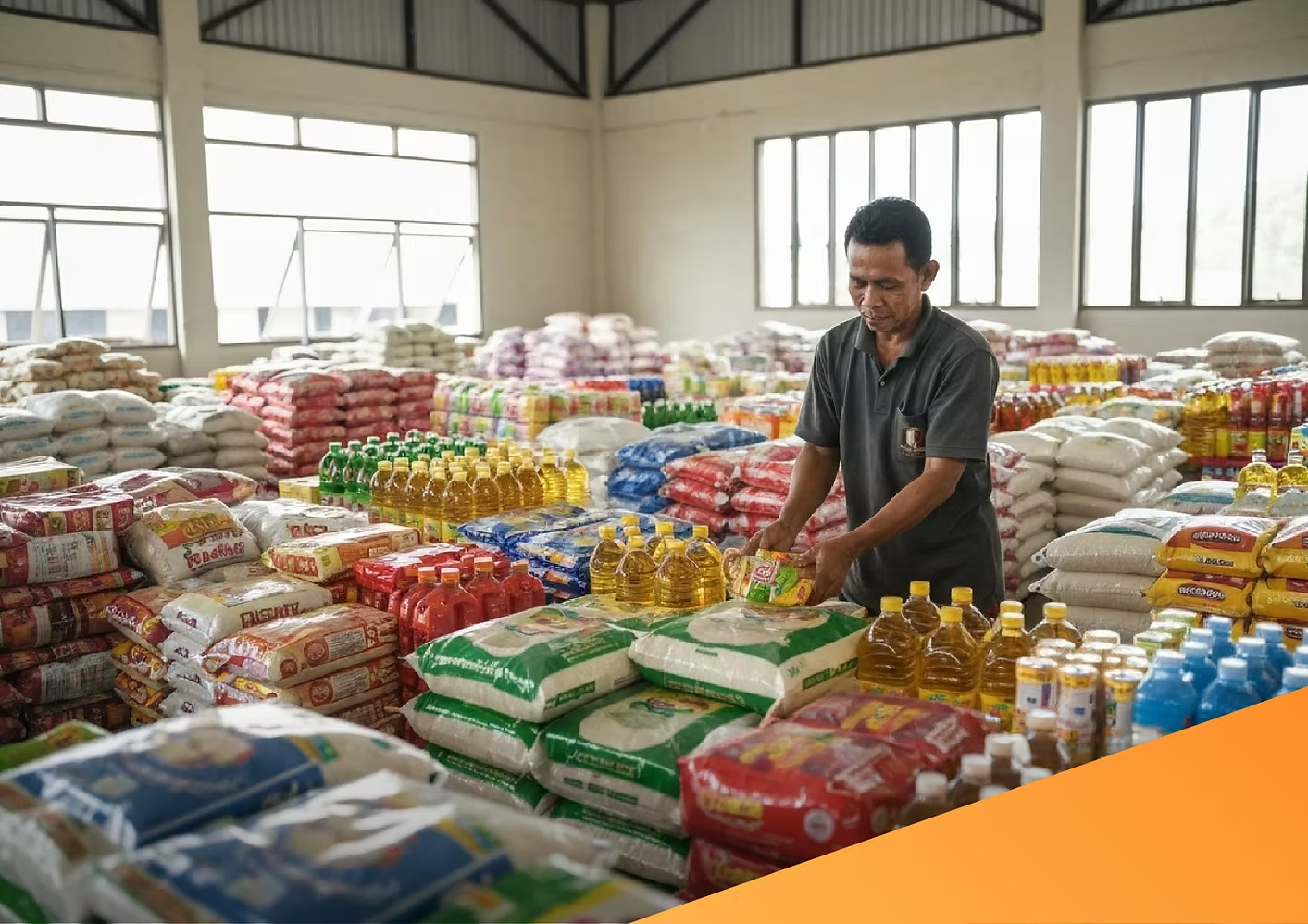
Staple foods, or nine basic necessities, are daily necessities that are always in demand. Because demand is stable throughout the year, the wholesale staple food business is a crisis-resistant business opportunity capable of generating long-term income. Even amidst difficult economic conditions, the market is almost never empty, and demand remains high.
However, competition in the grocery wholesale business is quite fierce, especially among established players with established loyal customers. Therefore, you need the right strategy to win the market. Let’s find out how!
Advantages and Opportunities of Wholesale Grocery Business

The grocery wholesale business is a business with strong foundations because it addresses basic human needs. Besides high demand, here are several advantages and opportunities that make this business worth considering.

1. The market is always there all year round
Unlike seasonal trends, basic necessities are needed daily by all levels of society. Constant demand minimizes the risk of a drastic drop in sales for wholesale groceries businesses. This provides income stability that’s difficult to find in other sectors.
2. Flexible Capital and Can Grow Gradually
Starting a wholesale grocery business doesn’t always require a large capital outlay. You can start small and expand your reach as your customer base grows. This business model also allows you to gradually add more products—following market demand trends.
3. Extensive Customer Network
Wholesale grocery customers include not only households but also stalls, minimarkets, restaurants, and even catering businesses. The broader the customer network, the more stable the turnover.
4. Resistant to Economic Fluctuations
Staple goods are a priority, so they will continue to be purchased even when people’s purchasing power declines. This makes the grocery wholesale business relatively safe from the negative impacts of a recession or economic crisis. In fact, during difficult times, consumers tend to buy in larger quantities to save money.
5. Potential for Product Expansion and Diversification
The grocery wholesale business offers opportunities to expand beyond basic necessities, such as household products or packaged foods. This diversification allows you to reach a wider market segment. Potential expansion also includes opening branches in other strategic locations.
Challenges in Running a Grocery Wholesale Business
Despite its stable market, the grocery wholesale business is not without its challenges. Here are some things you should anticipate, along with strategies to keep your business competitive.
1. Fierce Price Competition
The large number of players in the grocery wholesale business makes price competition difficult to avoid. Relying solely on low prices can erode profit margins. The solution is to provide added value, such as fast service, an easy ordering system, or delivery services. This way, customers will remain loyal even if prices aren’t always the lowest.
2. Fluctuations in Staple Food Prices
Basic food prices can fluctuate at any time due to seasonal factors, distribution, or government policies. These fluctuations can impact profits if not anticipated. The way to address this is by regularly monitoring price trends and collaborating with suppliers who can provide stable prices.
3. Complex Stock Management
Grocery products have varying shelf lives, requiring careful stock management. Excessive stock can risk spoilage or expiration, while understocking can drive away customers. The solution is to use a neat record-keeping system, even better with the support of an accurate stock management application.
4. Dependence on Certain Suppliers
Relying on a single supplier leaves a business vulnerable to delays or sudden price increases. Supplier diversification is crucial for ensuring a smooth supply of goods and minimizing the risk of operational disruptions.
5. Large Working Capital for Fast Turnover
A wholesale business requires significant working capital to maintain a large stock of inventory. However, this is well worth it if inventory turnover is fast. Therefore, as a wholesale business owner, you must be smart about scheduling purchases based on the priority of best-selling items. And, as Indonesia UMKM point out, you must be able to manage customer payments to prevent capital from being trapped in receivables.
Tips for Starting a Profitable Grocery Wholesale Business

Starting a wholesale grocery business may seem simple, but truly generating consistent profits requires more than you might think. Here are the steps you can take if you want to succeed in this field.
1. Don’t Ignore Market Research
You may feel like this isn’t necessary because your customer base is already established. However, you still need to study and determine who your target customers are—whether they’re retailers, small shops, or large households. This way, you can determine which types of groceries to prioritize. Don’t forget to also check your competitors’ pricing strategies.
2. Choose a Strategic Location
Location significantly impacts ease of distribution and customer base. Choose a location close to a hub of activity, such as a market, residential area, or main distribution route. An easily accessible location makes it easier for customers to come directly to purchase.
3. Prepare Capital and Manage It Wisely
A wholesale grocery business requires significant capital for initial stock. You must be able to manage your capital efficiently by prioritizing the best-selling and fastest-selling items. Only then will you maintain a healthy cash flow and ensure your business continues to thrive.
4. Build Good Relationships with Suppliers
Trustworthy suppliers are key to a smooth business. Maintain good communication, fulfill payments, and demonstrate a commitment to long-term cooperation. A good relationship can provide you with benefits such as special pricing, priority stock, or earlier market trend information.
5. Use a Modern Recording System
Effective inventory and transaction management makes your business more efficient. Use a business management app or software to track incoming and outgoing goods, pricing, and cash flow. Modern systems minimize human error and speed up reporting processes. With accurate data, you can make more informed decisions.
6. Offer Additional Services
In addition to selling groceries, you can add services like delivery or phone/online purchasing. This makes things easier for customers, especially those who are busy or located far away. This added value makes customers reluctant to go elsewhere, even if your prices aren’t the cheapest.
7. Promote Your Business Consistently
Even though groceries are essential, promotion is still crucial for attracting new customers. Use social media, banners, or brochures to promote your business. You can also offer special pricing for bulk purchases.
After studying the characteristics of a grocery wholesale business, you’ll realize that this business offers a stable and resilient opportunity. However, like any other business, it requires proper management to ensure continued growth.
For this reason, use Labamu as a digital partner. With various complete business management features, Labamu makes it easy to record transactions, manage stock, and create financial reports automatically. Learn about other interesting features here and immediately download the application via Google Play or the App Store!