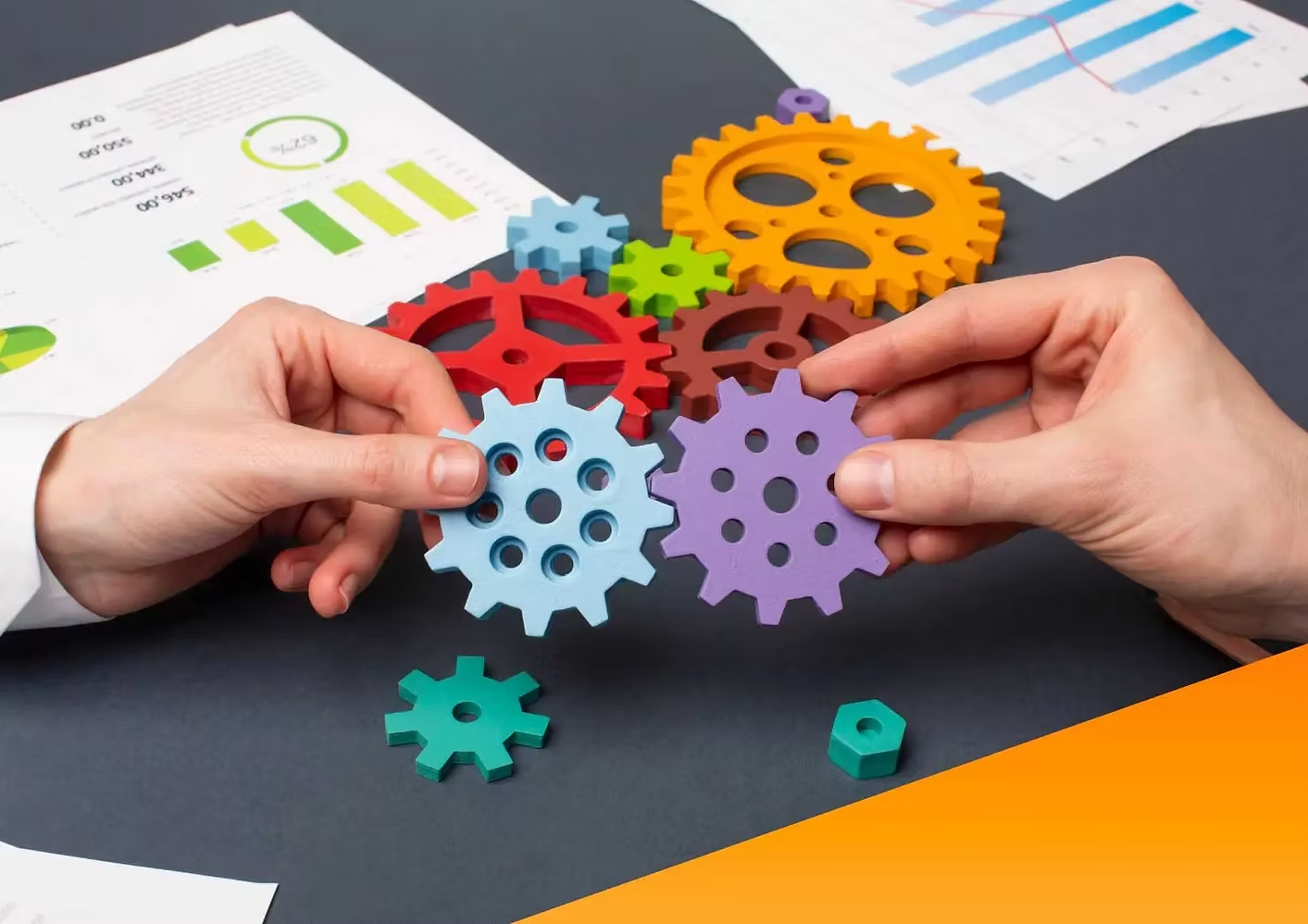
Having good production planning is one of the factors that can make a business run successfully.
Why? Because by doing production planning, you can create a realistic production schedule, ensure the production process runs smoothly and efficiently, and adjust the production process when problems occur.
The following is a detailed explanation, including the purpose and function of creating production planning.
Production Planning Explanation
Production planning is the process of developing strategies for the production of a company’s products and services.
This process describes how goods will be produced, the expected demand for those goods, and production requirements such as materials or labor.
So, the general process is to plan how many products will be made and the raw material requirements, as well as the production and delivery schedule for the products.
Not only that, production planning also includes creating a production cost budget plan, production capacity, and inventory control so that products can always meet market demand.
What is the Purpose of Production Planning?

1. Minimize Production Time
The primary goal of production planning is to minimize production time. When production is completed on time, it means that resources and equipment are being used efficiently and not wasted.
2. Increase Customer Satisfaction
By minimizing production time, customer satisfaction will drastically increase through improved delivery times. When production is on-time and more cost-effective, consumers immediately see the benefits.
Then, as production time and costs decrease, the resulting products have increased quality and quantity, according to consumer desires.
3. Reducing the Risk of Workforce Change
Another goal of production planning is to determine precisely the number of workers needed to carry out the production process.
If this is done correctly, there are no longer any production costs to pay for wasted labor.
4. Avoiding Changes in Production Values
With proper and strategic production planning, businesses can avoid losses due to the risk of a decrease in the value of a product.
For example, due to proper planning, the utilization of raw materials in the warehouse can be aligned with the scheduled production time. Therefore, the production value of the goods produced remains unchanged.
Production Planning Function
1. Guarantee Production and Sales according to Demand
This alignment can occur if production planning is carried out properly. This way, it’s easier to sell products to consumers according to expected demand.
In addition, you can also determine the quantity and quality of products produced so that they can continue to meet market needs in the long term.
2. Monitoring Production Results
Every plan is accompanied by established targets, which can be used to measure whether the production process is on track. From there, you can accurately monitor product results.
3. Determine Product Sales Time
When planning a product, you can create a schedule for the entire process, from raw material processing to adding features if needed, to the final stages of production.
That way, you can know for sure when the right time is to start selling your products to the wider market.
4. Production Planning Performance Measurement Tools
The final function of production planning is to serve as a benchmark for the performance of the planning process itself. If it runs well, process performance will improve. However, the opposite is also true.
So, reports from each planning activity carried out can be used as a basis for decision or policy making.
How Does the Production Planning Process Work?

1. Demand Forecast
The first step in the production planning process is to determine future production requirements based on predicted product demand.
Involves the use of historical sales data and analytics to forecast future sales.
Market research can also help predict whether demand will change based on external factors, such as product popularity and seasonality.
2. Determine Inventory Requirements and Production Capacity
Once you know what products need to be produced and in what quantity, the next step is to find out how much raw materials, resources, and labor are needed.
Determine the quantity needed to meet the estimated demand level requirements for each product.
This way, you can find out whether you are ready to handle the production schedule in the upcoming period.
3. Map the Production Steps
After determining how much resources and production time will be required, it’s time to map out the processes and steps required to produce it.
Here you should also identify any equipment, tools, and service providers that may be required.
After that, you can find out which processes can be done simultaneously, which depend on each other, and which ones need to be shifted.
4. Production Scheduling
After planning, the production scheduling phase is where you have to assign tasks to employees, communicate the plan to relevant stakeholders, and plan a schedule for each stage of production.
The production schedule should include how, when, and where the goods will go through the various stages of production. It should also specify who is responsible for ensuring they are carried out properly.
5. Control Production and Make Improvements
Once production starts, monitor progress and look for further opportunities to improve or optimize specific processes.
There are two benefits you will feel if you do this: it will allow you to act quickly to resolve unexpected challenges and it will tell you how accurate or effective your current production planning method is.
Rather than viewing a production plan as a project to be completed, think of it as the beginning of a constant cycle of production optimization.
If you need help creating production plans, you can find it in the Labamu app. It offers various features that can maximize your business’s potential.
For example, the Customer feature to recognize your loyal customers by filling in customer data and the Manage Raw Materials feature to manage business raw materials in more detail and comprehensively.
So, get the help you need now through the Labamu app, which you can download on Google Play or the App Store!