Back in school, you were always told that distributors are the parties who deliver goods from producers to consumers. It’s not completely wrong, but in practice the role of distributors is not that simple. So what is a distributor and how complex is their role so that business people must be able to find the right distributor? Check out the full review in this article!
What is a Distributor?
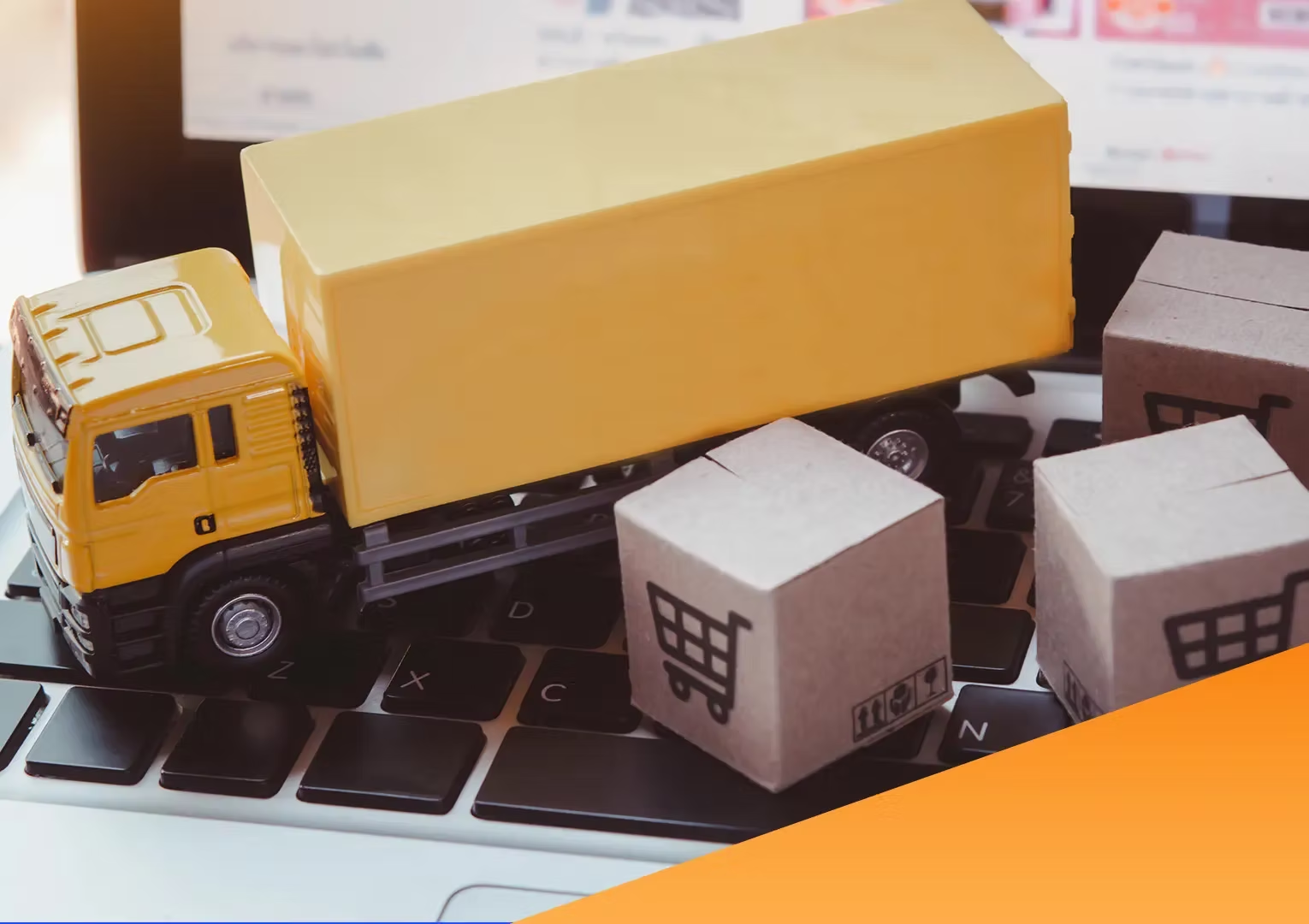
Quoting the explanation on the TechTarget page, distributors are an integral component in the distribution channel, acting as intermediaries between producers and downstream entities. Apart from bridging the gap between them, distributors also add important services to help smooth the distribution process.
In another sense, a distributor can be explained as a business or entity that buys products from manufacturers or suppliers and then resells them to retailers or end consumers.
So, at this point, Friends of Labamu finally understand that the role of distributors is not just to move goods from producers to consumers.
Types of Distributors

As a business entity, distributors also have a strategy. Apart from that, companies (manufacturers) also sometimes use multiple distribution channels or techniques. This then influences the complexity of the distribution process. To learn this, let’s get to know the types of distributors!
1. Direct Distributor
Direct distributors provide a simple way to deliver products to customers—without using middlemen. The easiest example is a manufacturer who sells their products through official stores in the marketplace, physical stores, or door-to-door sales.
This strategy can increase customer confidence because it is guaranteed that the goods sent will be genuine.
2. Indirect Distributor
Indirect distributors involve other people or businesses to deliver products to end consumers. In this case, the indirect distributor will buy the product from the manufacturer and then sell it to wholesalers, retailers, resellers or agents.
The advantage of this strategy is that it can reach more customers and generate more sales. However, long distribution chains incur additional costs and lengthen delivery times.
3. Exclusive Distributor
As the name suggests, this distributor gets exclusive rights to sell certain products. That means, they are the only ones allowed to sell that product in a certain area for a certain period of time.
This strategy gives distributors a lot of control over how they sell and distribute products. Most often used in high-end products.
4. Intensive Distributor
On the other hand, intensive distribution seeks to distribute products as widely as possible to as many places as possible. With this strategy, manufacturers hope that their products will be more visible and easily accessible to customers so that they can get as many sales as possible.
This strategy is most often used by FMCG companies whose product selling prices are relatively low and demand is high.
5. Selective Distributor
Selective distribution is a middle ground between exclusive and intensive distribution. This arrangement offers exclusivity, but still has a wider consumer reach.
An example of a selective distributor is a luxury department store company that partners with a high-end watch company.
6. Dual Distributor
Kemudian, ada distributor ganda (dual distributor) yang menggabungkan strategi distribusi langsung dan distribusi selektif untuk menjangkau pasar yang lebih luas.
An example is a cellphone manufacturer that has its own storefront but still partners with electronics stores that sell other goods.
7. Reverse Distributor
The reverse distributor actually works the opposite. In this case, goods flow from consumers (back) to the company.
The use of this strategy is limited and rarely used. Most often applied for recycling, repair, or disposal of goods.
Benefits of Distributors as Business Partners
As business partners, distributors can add value and offer the following benefits.
1. Keahlian Pasar
Distributors have in-depth knowledge of local markets, consumer preferences and applicable trade regulations. This helps manufacturers to market their products in certain regions, while also facilitating exports to enter the global market.
2. Inventory Management
Distributors help manufacturers reduce storage costs and ensure products are available and able to meet market demand.
3. Risk Sharing
Partnering with a distributor means you can reduce risk because they absorb potential losses due to slow-moving or obsolete inventory.
4. Scalability
Distributors offer increased scalability by providing faster, more efficient distribution efforts and accommodating demand that fluctuates with trends.
5. Marketing Support
Distributors support marketing efforts, promote products through their channels, and utilize advertising and promotional resources at their disposal.
6. Customer Service
Distributors often offer customer service support to retailers and even to end customers. This makes manufacturers free from after sales service problems.
7. Cost Effectiveness
Distributor mengonsolidasikan pengiriman dan menangani logistik secara efisien sehingga mengurangi biaya pengiriman dan mengoptimalkan keseluruhan proses distribusi.
Tips for Choosing the Right Distributor

Distributors play an important role in bridging manufacturers and retailers, simplifying supply chains, and facilitating product distribution to customers. Therefore, it is important for producers to choose a distributor. The following are several things that must be considered to choose the right distribution partner.
1. Determine the Required Criteria
As a manufacturer, you need to determine certain criteria that distributors must fulfill. This includes geographic coverage, industry expertise, forms of support, and reputation.
By understanding what you need, this will help you narrow down your options to find a suitable distributor.
2. Research Potential Distributors
After finding several candidates, conduct thorough research to identify whether they really meet the criteria you need.
One thing that should not be ignored is checking their financial stability, it would be bad if the distributor could not pay the bill or had other financial problems that caused delays or delivery problems.
3. Evaluate Experience and Track Record
Next, check the distributor’s experience and track record. This is to ensure that your distribution partner works professionally and is truly reliable.
More than that, experienced distributors understand the product, target market and local regulations better, thereby increasing distribution effectiveness.
4. Open Communication and Start Negotiations
The next step is to contact them. It is very important to communicate and discuss your needs, expectations and desired conditions. This is key to understanding each other’s capabilities and compatibility.
Next, negotiate terms such as price, payment terms, exclusivity, and support services to ensure a mutually beneficial business relationship.
5. Consider Flexibility and Scalability
Distributors must have a wide reach to the target market. They must be able to select and distribute products through the most appropriate channels.
Therefore, choose a distributor who can offer flexibility and scalability to accommodate business growth and changing needs.
That’s a review of what a distributor is and other things you should pay attention to. As your business continues to grow, you also need to switch from conventional records to the Labamu application which can document all transactions and business administration needs in just one application.
Come on, immediately download the application via Google Play or the App Store and join the 84,000+ other entrepreneurs who have felt the benefits!