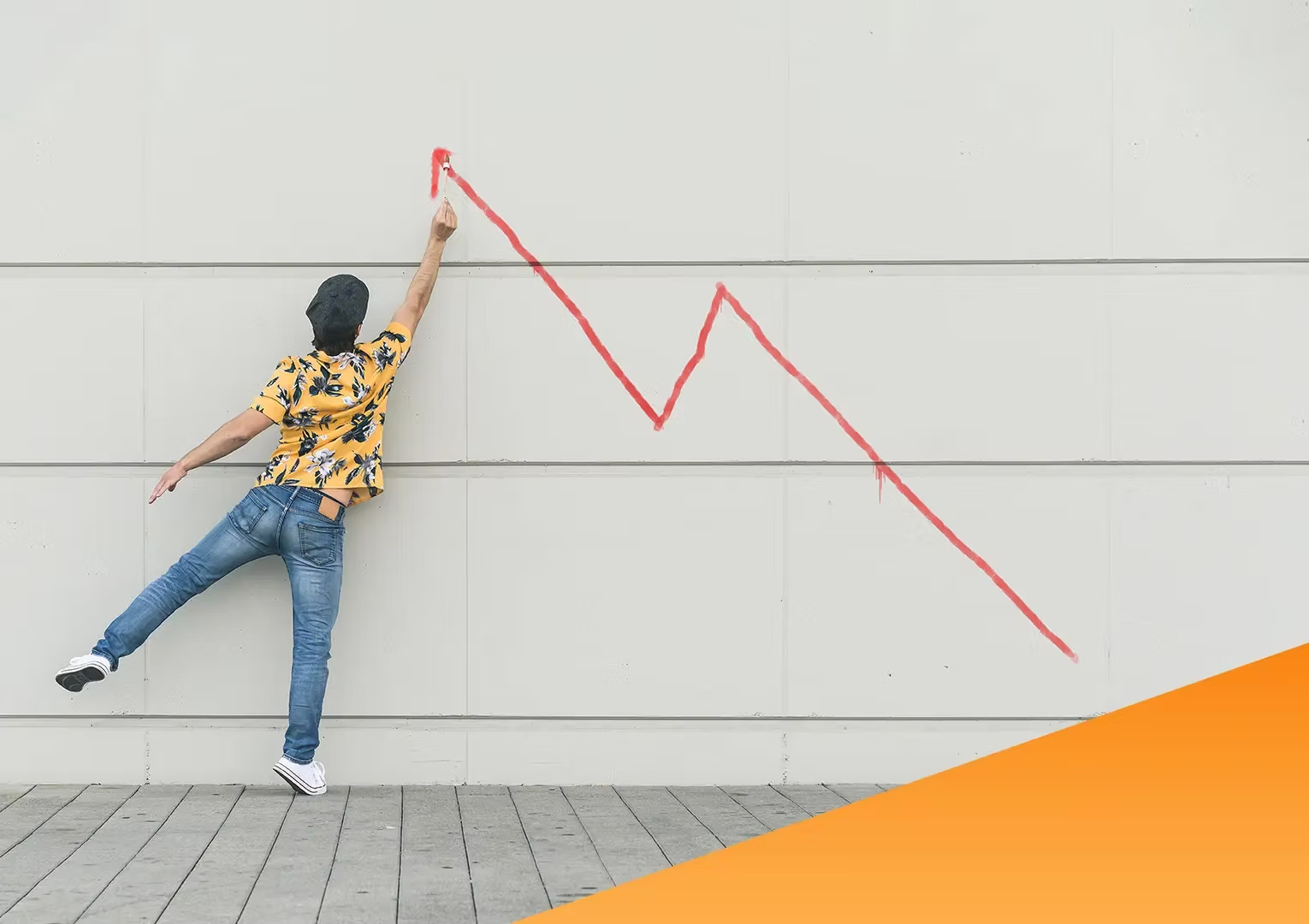
One of the terms in economics that people often hear is fluctuation. Usually experts use this term when talking about the rise and fall of prices on the market.
So, what exactly is meant by fluctuation? What are the causes and types, and what are some examples? Everything will be discussed here.
Fluctuation Is

Literally, in the Big Indonesian Dictionary (KBBI), fluctuation is defined as “undetermination” or “shakiness”.
However, broadly speaking, fluctuation can be interpreted as a symptom or condition that shows price fluctuations or changes in prices due to the influence of supply and demand.
So, it can be interpreted that fluctuation is a term to describe unstable conditions, for example the rise and fall of the price of a good or service. This fluctuation phenomenon can even cause shocks in the world of economics and business.
What Causes Fluctuations?
1. Religious or Cultural Holidays
It is commonplace that before religious holidays, such as Eid al-Fitr or Christmas, almost all food items experience fluctuations. This is because the need for almost all basic commodities will increase as the big day approaches, which causes prices to rise.
2. Production Costs
For example, fluctuations in egg prices can be caused by increases in production costs, such as feed prices. Because production costs are increasing, egg farmers will of course increase their selling prices to cover production costs and make a profit.
The same thing also applies to prices of basic commodities. When fertilizer prices rise, farmers are forced to increase the price of their crops in order to maintain profits and cover production costs.
3. Season
Not all food ingredients are available in all seasons. There are many that can only be produced and harvested in certain seasons.
So, when it’s not in season, supplies also become more limited. If demand remains or even increases, then the price of food will also increase.
4. Community Income
With an increase in income, demand for certain products can also increase. Why?
The reason is that people who previously used lower quality products, switch to better quality products as their income increases.
5. Government Policy
This is another factor that causes fluctuations because the government holds quite a lot of control over the free market.
That is why the monetary and fiscal policies set by the government and central banks will have a major impact on financial markets.
For example, when Bank Indonesia (BI) carries out monetary policy by raising and lowering interest rates, this can slow down or try to accelerate domestic growth.
6. Economic Conditions of the Country
The country’s economic conditions greatly influence price fluctuations. The more stable the economic conditions in a country, the possibility of fluctuations will also decrease.
Influencing economic conditions can come from internal factors such as the number of unemployed and income levels, as well as external factors such as natural disasters and wars in other countries.
Types of Fluctuations
1. Regular Fluctuations
Also called cyclical fluctuations, these are fluctuations that refer to different periods of growth or decline of something, which occur from time to time.
2. Irregular Fluctuations
Different from regular fluctuations, this type of fluctuation actually occurs because it does not comply with changes that can actually be predicted in advance. Irregular fluctuations can also occur due to different external effects.
Contoh Fluktuasi
1. Price of goods
This is an example of the fluctuation that occurs most often and is felt by everyone. Currently, the prices of goods on the market often experience significant increases and decreases. One of the causes of this fluctuation is due to demand and supply factors.
For example, fluctuations in rice prices increase due to limited supply or decrease due to an abundant harvest.
2. Currency Value
The price of a country’s currency can also fluctuate when compared to other countries’ currencies. For example, changes in the exchange rate of the United States Dollar (US$) against the Rupiah (Rp) are always fluctuating.
Several factors that cause fluctuations in currency values include the country’s economic and political conditions, natural disasters, war or riots, and government policies.
3. Share Price
This is an example of fluctuations that are familiar to investors. Like prices and currency values, price fluctuations are also very common.
Factors that influence the rise and fall of share prices are not only supply and demand, but also company conditions, the economic crisis, and various speculative factors.
4. Oil Prices
The rise and fall of oil prices will also determine the amount of government revenue or expenditure. That is why an increase in world oil prices could be a major trigger for a global economic crisis.
Ini karena fluktuasi harga minyak akan menentukan jumlah subsidi yang diberikan pemerintah untuk produksi dan konsumsi masyarakat maupun perusahaan.
So, if there is a war that hinders export activities from the main supplier country, such as Russia’s invasion of Ukraine, then world oil prices will fluctuate.
Can Fluctuations Be Overcome?

Actually, fluctuations can have a positive impact. However, there are quite a few cases of fluctuations that actually have a negative impact. Even though it is sometimes difficult to avoid, there are ways to overcome fluctuations, namely as follows.
1. Set the amount of demand and supply
As mentioned previously, the amount of demand and supply can affect the price of goods on the market.
If the quantity of demand and supply can be regulated to remain stable, it is hoped that there will be no price changes.
2. Maintain Stable Economic Conditions
One way is to maintain the country’s social conditions which can greatly influence economic conditions.
If social conditions are stable, then this can prevent conflict within a country which can also make the country’s economy more conducive.
Then, to maintain more stable economic conditions, this can also be done by maintaining relationships with external parties.
3. Make Macroeconomic Policy
The macroeconomic policy made by the government aims to provide facilities related to the country’s economic growth.
Policies like this need to be implemented in the right way so that economic growth can take place in a healthy manner. As a result, fluctuations can be resolved or even avoided before they occur.
That is an explanation of fluctuations, the impact of which can also be felt in the business world. If you are one of the business people and are also affected, try using the Labamu application to overcome this.
Whatever type of business you have, take advantage of the various features in this application to maximize your business potential. For example, by using the cashier feature for easy and fast transactions or automatic disbursement of funds as needed without fees.
Come on, download the Labamu application directly on Google Play or the App Store!