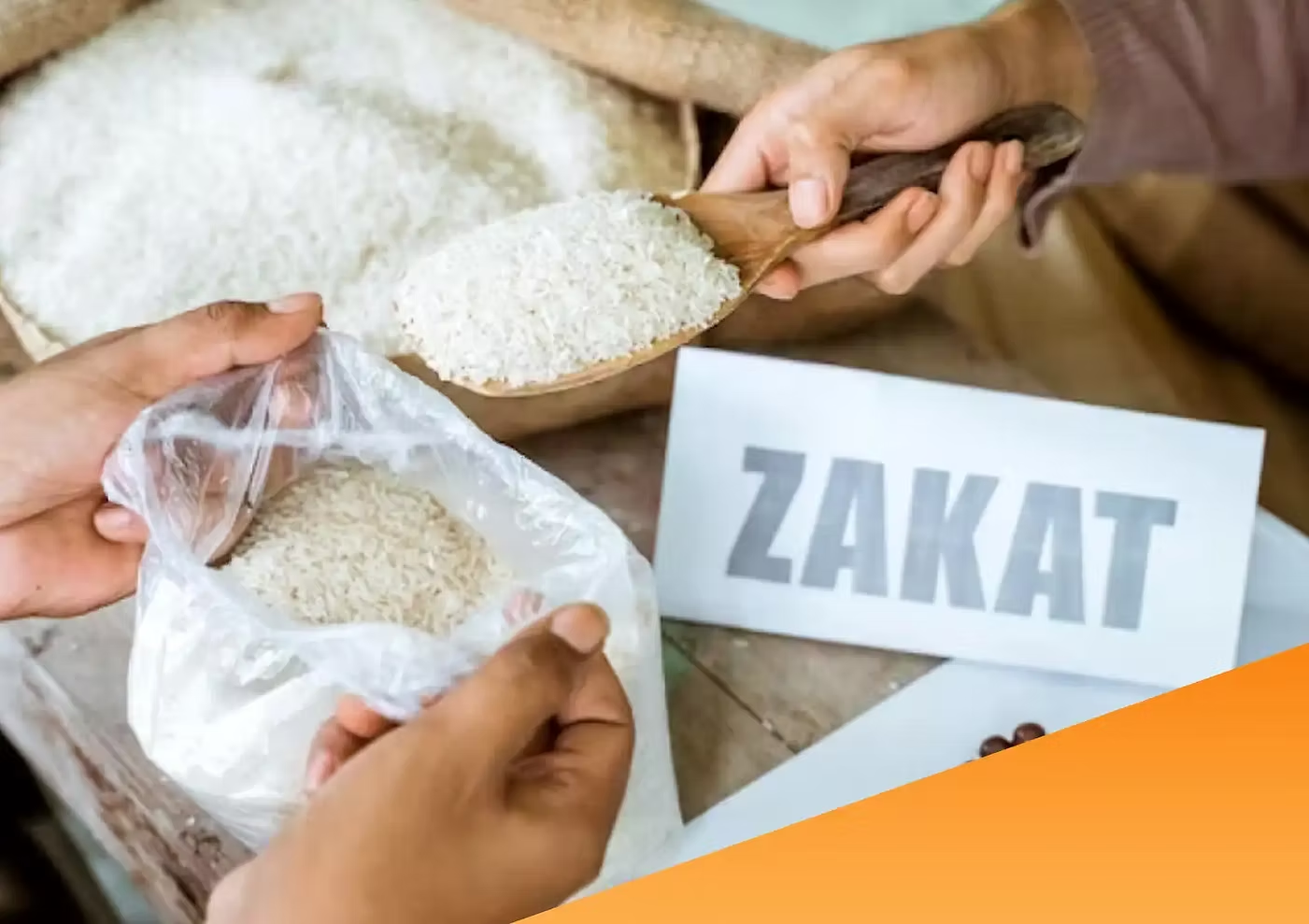
Zakat is one of the pillars of Islam, obligatory for every able-bodied Muslim to fulfill as a form of concern for others. This obligation is not only an act of worship but also contributes to maintaining economic balance and social welfare. Unfortunately, many of us still don’t understand the various types of zakat and their requirements. To fulfill it correctly, read this article for a complete explanation!
Understanding What Zakat Is

Zakat is the fourth pillar of Islam and is one of the main obligations for every Muslim who is able.
In various verses of the Quran, zakat is often mentioned alongside the command to pray. One such mention is in Surah Al-Baqarah, verse 43, which reads:
“And establish prayer, pay zakat, and bow with those who bow.”
The association of zakat with prayer demonstrates the crucial importance of this form of worship in Islam. If prayer is a means of establishing closeness with God (habluminallah), then zakat is a way to establish good relationships with others (habluminannas).
Legally, zakat is obligatory for every Muslim who meets certain requirements. The following are the requirements for assets subject to zakat, as explained on the BAZNAS website:
- These assets are halal goods and were obtained in a halal way.
- The assets are in full ownership of the owner and can be utilized.
- The assets have reached the nisab according to the type of assets, namely they have reached or exceeded the minimum limit set by sharia.
- The assets have passed the haul, meaning they have been owned for a full year in the Hijri calendar.
- The owner does not have any short-term debts—if the amount of his assets after deducting debts is below the nisab, then he is not subject to zakat obligations.
- Assets have the potential to grow, such as gold, silver, trade, and agricultural products.
Benefits of Paying Zakat
Etymologically, the word “zakat” comes from the Arabic word zakāh, which means “cleanliness,” “purity,” “growth,” or “blessing.” This meaning reflects that zakat not only purifies wealth but also purifies the soul from stinginess and brings blessings to those who pay it.
As mentioned, the following are the complete benefits of paying zakat:
- Zakat cleanses property from other people’s rights and purifies the soul from stinginess and excessive love of the world (QS. At-Taubah: 103).
- Distributing wealth to the less fortunate so that it can reduce social inequality and improve the welfare of the people (QS. Al-Hasyr: 7).
- Bringing blessings and increasing one’s fortune because giving zakat will not reduce wealth, in fact Allah promises a greater reward (HR. Muslim).
- Prevents stinginess, teaches sincerity in sharing, and fosters a sense of caring for others (HR. Bukhari & Muslim).
- It is a form of gratitude for the blessings that Allah has given and at the same time protects us from punishment on the Day of Judgment (QS. Ibrahim: 7).
Types of Zakat
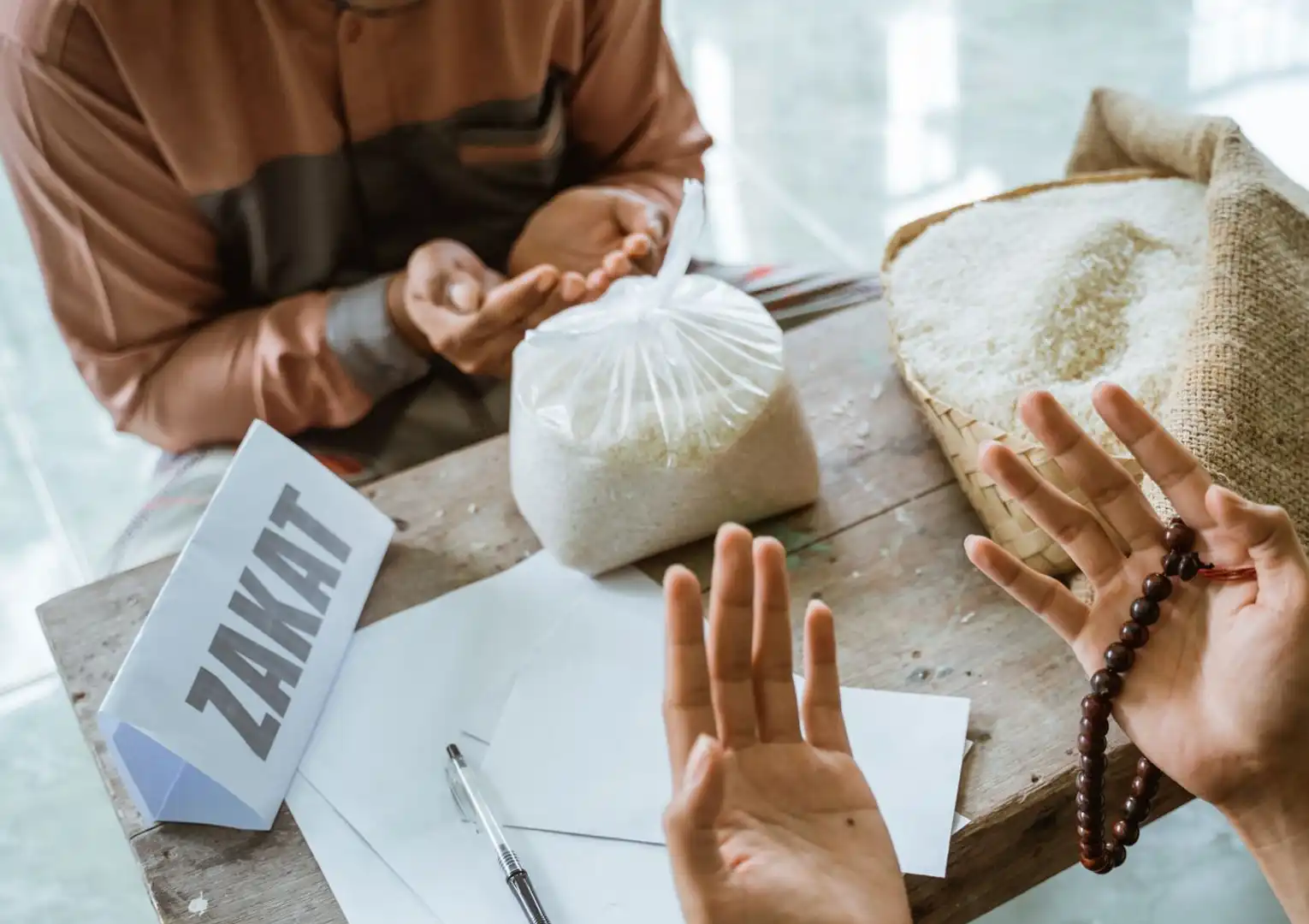
Secara umum, di dalam Islam, zakat terbagi menjadi dua jenis, yakni zakat fitrah dan zakat mal. Berikut adalah penjelasan untuk masing-masing jenis.
1. Zakat Fitrah
Zakat al-Fitr is an obligatory charity (zakat) for every Muslim to pay before Eid al-Fitr as a form of self-purification after fasting during Ramadan. Besides being a form of obedience to Allah SWT, zakat al-Fitr also aims to help the poor and needy so they can celebrate Eid properly.
Zakat fitrah is obligatory on every Muslim, both men and women, adults and children, even babies born before sunset on the eve of Eid al-Fitr. In this case, the head of the family is responsible for paying zakat fitrah to family members who are his dependents—including children and parents who cannot afford it.
In principle, zakat fitrah may be paid as early as the beginning of Ramadan and as late as before the Eid al-Fitr prayer. However, there are certain times when it is most important to pay zakat fitrah, namely:
- After sunset on the last day of Ramadan until the time of the dawn prayer on Eid al-Fitr.
- After the morning prayer on Eid al-Fitr, the Khatib ascends the pulpit for the Id prayer.
Zakat al-Fitr must be paid in the form of staple foods commonly consumed by the local population, such as rice, wheat, or dates. The amount is one sa’, equivalent to approximately 2.5–3 kg of staple food per person. Under certain circumstances, some scholars permit zakat al-Fitr to be paid in cash equivalent to the price of the staple food.
2. Zakat Mal
Zakat mal is zakat imposed on certain assets owned by a Muslim who has reached the nisab (the minimum limit of assets that must be given zakat) and has passed the haul (ownership period of one Hijriah year).
Zakat al-mal functions as a form of purifying wealth and distributing prosperity so that wealth does not accumulate in certain groups.
Mal zakat must be issued after the assets owned last for one Hijriah year (haul), except for agricultural, mining and rikaz products for which zakat must be issued immediately.
So, because zakat mal is paid according to the type of wealth, zakat mal is divided into several types as follows:
- Zakat on Gold, Silver and Precious Metals
This zakat is levied on gold, silver, and other precious metals that have reached the nisab (the threshold) and haul (the haul). The nisab for gold is 85 grams of pure gold, while the nisab for silver is 595 grams. If the amount reaches the nisab and has been owned for one year, the zakat due is 2.5% of the total assets.
- Income Zakat (Profession)
This zakat is levied on a person’s income or salary, whether from employment, professional work, or independent business. The nisab (minimum threshold) is calculated based on the value of gold, which is 85 grams of gold per year or approximately 7 grams per month. If the net income (after deducting basic needs) reaches the nisab, the amount of zakat that must be paid is 2.5%.
- Trade Zakat
This zakat applies to business owners or traders who own assets in the form of merchandise. The nisab for trade zakat is calculated based on the value of gold, which is 85 grams, with a zakat rate of 2.5% of the total traded assets after deducting debts and operational costs.
- Zakat on Agriculture, Plantations, and Forestry
Agricultural zakat is imposed on harvests that reach the nisab (the minimum threshold) of 653 kg of unhusked rice or 520 kg of rice. If crops are irrigated by rainwater or natural water sources, the zakat is 10% of the harvest. If artificial irrigation is used, the zakat is 5% of the harvest.
- Livestock Zakat
This zakat is imposed on livestock such as cows, goats and camels that have reached the nisab and are allowed to graze freely. For example, for zakat on goats, the nisab is 40 heads, with zakat obligation on 1 goat if it has been owned for one year.
- Zakat on Investment and Shares
Zakat on investments and shares is levied if total assets reach the nisab (the threshold) based on the value of gold. The amount is 2.5% of the net profit or market value of the shares owned, after deducting other financial obligations.
- Zakat on Mining Goods
Assets obtained from mining, such as oil, gold, or coal, are subject to zakat of 2.5% if processed by individuals or companies.
- Rikaz
Rikaz is a treasure or found treasure. This type of mall zakat does not require a haul (storage time) or nisab (minimum amount to be subject to zakat obligations). Meanwhile, the zakat level is 20% of the amount of treasure found.
After understanding the various types of zakat and their provisions, Labamu Friends will surely understand that managing personal finances is just as important as managing business finances.
The difference is, for managing business operations, you can use the Labamu app, which is always ready to record every financial transaction, sales data, and inventory management. Download the app now via Google Play or the App Store. so you can manage your business more accurately and efficiently!