
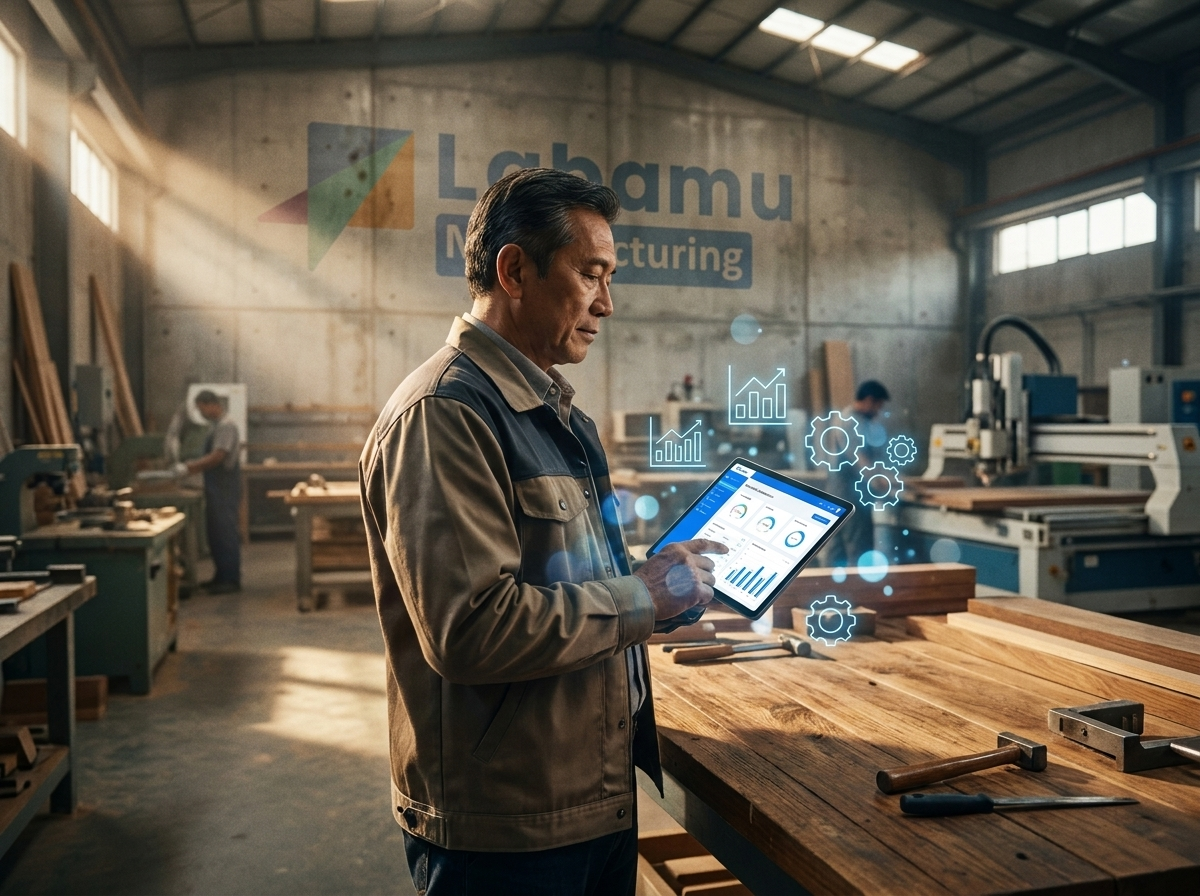
Adopting Indonesian manufacturing software is a crucial step to maintain the operational competitiveness of your factory amidst global industrial competition. The latest technology offers an automation system capable of monitoring the entire production line in real-time to minimize the risk of human error. This digital transformation not only streamlines workflow but also provides much-needed data accuracy for business decision making.
Before going into an in-depth discussion, here are technical facts about industrial digitalization that you need to know:
- A study from the International Journal of Production Research shows that Manufacturing Execution System (MES) integration can increase factory productivity by up to 22%.
- Implementing cloud-based technology reportedly reduces manufacturing companies’ IT infrastructure maintenance costs by 30% compared to traditional on-premise systems.
- According to a recent industry survey, real-time monitoring on production lines can reduce product defect rates by up to 15% through early detection of machine anomalies.
Manage your production operations more professionally through manufacturing management solutions and an integrated factory order input system.

Manufacturing Software Recommendations 2026
Choosing the right platform will determine how much operational cost savings you can achieve on the production floor. The following are several system options that are currently trending and widely used by manufacturing industry players in the country.
- Labamu Manufacturing: Cloud-native solution for production optimization, raw material stock tracking, and automatic financial reports for SME to medium scale factories.
- SAP S/4HANA: A global ERP platform that offers highly complex manufacturing modules for large-scale companies with global supply chain integration needs.
- Oracle NetSuite: A cloud-based system focused on production data transparency and comprehensive inventory management for growing manufacturing companies.
- HashMicro: Local manufacturing software with complete features ranging from production cost management to factory machine maintenance that is easy to customize according to needs.
- Odoo Manufacturing: A flexible, open-source application for managing Work Orders, Bill of Materials, and production schedules in one interactive dashboard.
Main Features that Must Be Available
A reliable system must have integrated modules to connect data from the warehouse to the end consumer automatically. You need to ensure that the software has high scalability capabilities in accordance with the growth of the factory’s annual production volume. Flexibility in setting up production workflows is the main key so that the system can adapt to changes in very dynamic market demands.
- Manufacturing Management: This feature allows you to record incoming orders, for example Labamu Manufacturing monitors production progress at each stage, and arranges delivery of goods automatically.
- Real-Time Inventory Tracking: The system’s ability to provide accurate remaining raw material stock information to avoid production bottlenecks due to running out of key materials.
- Automatic Financial Reports: A module that converts every production activity into neat accounting records so you can see the profitability of each product line.
- Analisis Kinerja Staf: Fitur pemantauan produktivitas tenaga kerja di lantai produksi untuk memastikan setiap jadwal kerja berjalan sesuai dengan target yang ditetapkan.
Benefits of Using Software
Time efficiency is the biggest advantage when factories switch to using production monitoring technology that is based on cloud computing. For example, Labamu Manufacturing enables rapid data synchronization allowing production teams to respond much more responsively to machine interruptions or raw material delays. Resource use becomes more optimal because any material waste can be detected and reduced through analysis of data produced by the system.
- Reducing waste production materials through more precise and accurate material planning.
- Goods delivery accuracy increases because production schedules are directly integrated with logistics management.
- Transparency of production costs per unit makes it easier for you to determine a more competitive selling price.
The Importance of Cloud-Based Manufacturing Systems
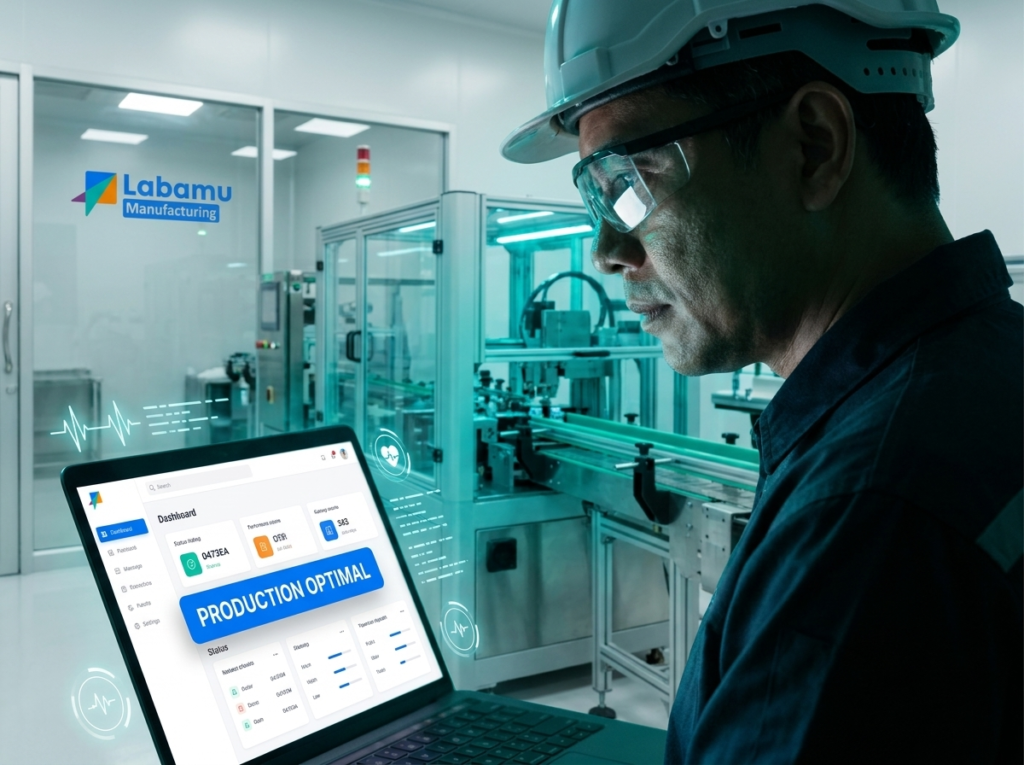
The use of a cloud-based manufacturing system allows access to operational data from anywhere without having to be at the factory’s physical location at all times. You can monitor daily reports via mobile device with data security guaranteed by high-level encryption protocols. The cloud subscription model is also much more affordable for business owners because it does not require an expensive upfront investment in server hardware.
Integration between departments becomes smoother because all staff see the same data source simultaneously in the system. There are no more overlapping work instructions or differences in stock records between the warehouse and production departments in the field. The ease of automatic system updates ensures that your factory always uses the latest technology without having to carry out manual installations that take up a lot of time.
Factory Automation 2026 with IoT Technology
Future industrial trends emphasize the use of smart sensors that are directly connected to management software to create factory automation in 2026. The data sent by these sensors will be processed instantly into information about machine efficiency and potential damage that may occur. You can implement more effective preventive maintenance strategies to extend the service life of valuable machine assets in the factory.
LSI Manufacturing Execution System (MES) is a bridge between physical machines and high-level planning systems to ensure every second of production counts. Automated production line management will reduce dependence on manual data input which is often prone to typing errors. The result is much more consistent product quality and standard operating procedures that are truly carried out with high discipline by the system.
Industry 4.0 Software Implementation Strategy
The first step in implementing Industry 4.0 software must start with mapping the current workflow to identify which parts are the slowest. You must provide intensive training to staff so that they feel comfortable and are able to operate the new technological devices optimally. Data migration from manual records to a digital system must be carried out in stages to maintain smooth daily factory operations during the transition period.
Regular evaluation of system performance is very necessary to ensure that the technology investments made really have a positive impact on profitability. Listen to input from operators on the production floor because they are the daily users who best understand the technical obstacles in using the application. Continuous improvement in system configuration will help you achieve the most optimal level of efficiency according to the unique characteristics of your manufacturing business.
Optimize Your Factory Operations Using Modern Digital Solutions
Digital transformation through the use of the right software is no longer just an option but a basic necessity to survive in today’s manufacturing industry. Speed in processing production data into financial information will give you a strategic advantage in planning future business expansion. Labamu is here as a trusted partner to help you streamline every production process from order receipt to final financial reports.
An integrated system will ensure that all factory assets and resources are managed with high transparency to maintain the stability of the company’s cash flow. With complete manufacturing feature support, you can focus more on product innovation and new market development without being burdened by the hassle of manual administration. Start modernizing your factory today to build a stronger, leaner and more profitable business foundation.
Increase production efficiency in your furniture industry or handicraft manufacturing business with more organized solutions. Contact us to consult on the best way to integrate manufacturing systems into your daily operations now.