
A sales report isn’t just a routine document; it’s a window into the heart of your business. It offers invaluable insights that can unlock growth and success.
In an era where every decision can determine the fate of your business, understanding the meaning and power of sales reporting is more important than ever.
For the bold and innovative entrepreneur, having a deep understanding of sales reporting can be the difference between merely surviving and truly thriving in a competitive marketplace.
Take a deep look at various important things about sales reports, starting from the definition, benefits, types, how to make them, and examples.
Understanding Sales Reports
Why are sales reports so crucial? The answer is simple yet fundamental. Because a sales report is a document that summarizes all transactions that occurred within a specific period.
It provides an overview of what’s being sold, how much, and when. But much more than that, this report is the heart of any successful business strategy.
Sales reports also serve as a bridge connecting various aspects of a business, from production to marketing, from inventory management to customer service.
This report provides a touchpoint for each department to collaborate, innovate, and improve overall performance.
Thanks to sales reporting, an environment is created where every team member, no matter their role, can see how their contribution impacts the bigger picture.
7 Benefits of Sales Reports for MSMEs
Digging deeper, a sales report isn’t just a collection of data. It’s the compass that steers your business ship through the ever-changing market waters.
Every number, every trend, has a story that can provide you with valuable insights. Let’s explore the key benefits of sales reporting.
1. Improve Decision Making

Smart decisions are the backbone of any successful business. With sales reports, you can base your decisions on more than just intuition.
You have concrete data that illustrates what works and what doesn’t. This allows you to adjust your strategy and allocate resources more effectively.
2. Optimizing Inventory Management

Inventory is a valuable asset, and managing it wisely is an art. Sales reports provide insight into which products are selling well and which are less popular.
Armed with this information, you can adjust inventory levels, avoid overstocking, and ensure that your business always has what your customers want.
3. Understand Customers

Knowing your customers is key to building lasting relationships. Sales reports help you identify customer preferences, purchasing trends, and peak seasons.
Armed with an understanding of these patterns, you can tailor offers, personalize communications, and improve customer satisfaction.
4. Improve Sales Performance

Every business strives to improve its sales performance, and sales reports are the roadmap to achieving this.
By analyzing sales data, you can identify growth opportunities, evaluate the effectiveness of marketing campaigns, and improve sales tactics to maximize revenue.
5. Set Realistic Goals

Setting goals is important, but it is even more important to set them in a realistic and measurable way.
Sales reports provide a factual basis for setting challenging but achievable goals.
By looking at past performance, you can determine what is realistic for your business and measure progress towards those goals.
6. Improve Team Collaboration

Sales reports are useful not only for business owners but also for the entire team. By sharing sales data, all team members can see how their contributions impact overall performance.
The data will foster a sense of shared responsibility, enhance collaboration, and help build a results-oriented culture.
7. Anticipating the Future

In business, it’s always best to stay ahead. Sales reports allow you to not only understand current trends but also anticipate future changes.
By analyzing historical data, you can make projections and plan for the future with more confidence.
What are the Types of Sales Reports?
Sales reports are an essential business tool that helps understand sales performance and make strategic decisions. Here are some commonly used types of sales reports:
- Sales report per time period: Presents sales data within a certain time period, such as daily, weekly, monthly, quarterly, and annually.
- Sales report per product: Shows sales performance for each product.
- Sales report by region: Track sales by geographic location.
- Sales report per customer: Shows sales data for each customer or customer segment.
- Sales report per salesperson: Records sales made by each member of the sales team.
- Profit margin analysis report: Presents information about the profit generated from sales.
- Sales pipeline report: Map the stages in the sales process, from prospect to close.
- Sales forecasting report: Sales predictions based on historical data and market trends.
Each type of report has its own uses and can be customized according to specific business needs to gain deeper insights into sales performance and assist in strategic decision making.
7 Ways to Create an Easy-to-Understand Sales Report
Creating an effective sales report doesn’t have to be a daunting task. With the right approach, you can craft a report that’s not only informative but also easy to read and understand.
Follow these steps to create a sales report that will provide real value to your business.
1. Collecting Data

The first step is to gather all relevant sales data. This includes daily, weekly, monthly, and annual sales, details of products or services sold, customer information, and any promotions or discounts offered.
Ensuring the data you collect is accurate and complete is also an important step in how to create a sales report to prevent errors in analysis.
2. Determine the Report Format

After the data is collected, the next step in creating a sales report is to determine the report format that best suits your business needs.
Do you need daily sales reports for quick monitoring or monthly reports for in-depth analysis?
Choose a format that will make it easier for you and your team to understand and act on the information presented.
3. Using Software or Tools

To make the report creation process easier, consider using report creation software or tools.
Many digital solutions offer customizable templates, allowing you to pull data directly from your sales or accounting systems. Choose the tool that best suits your business needs and budget.
4. Present Data Clearly

Present data in an easy-to-understand format. Use tables, graphs, and charts to visualize information, helping readers quickly understand trends and patterns.
Make sure each visual is accompanied by a brief explanation to ensure there is no confusion.
5. Analyze and Provide Insight

Sales reports aren’t just about the numbers, they’re about the information you can draw from those numbers.
Include analysis of what the data shows, such as increased sales on specific products, customer purchasing trends, or the effectiveness of promotional campaigns.
Provide recommendations based on your analysis to guide future business decisions.
6. Include an Executive Summary

Begin the report with an executive summary, providing an overview of sales performance in the reported period.
This summary should include key points, key findings, and recommended actions. This allows busy readers to grasp the key points without having to read the full report.
7. Review and Revise

Before sharing a report, do a thorough review to ensure there are no errors.
Ask someone on your team to review the report with fresh eyes, helping to identify areas that may need clarification or revision.
5 Examples of Simple and Easy-to-Read Sales Reports
This time, Labamu invites you to understand examples of sales reports based on their type, which will give you a new perspective in compiling effective and attractive reports.
1. Daily Sales Report
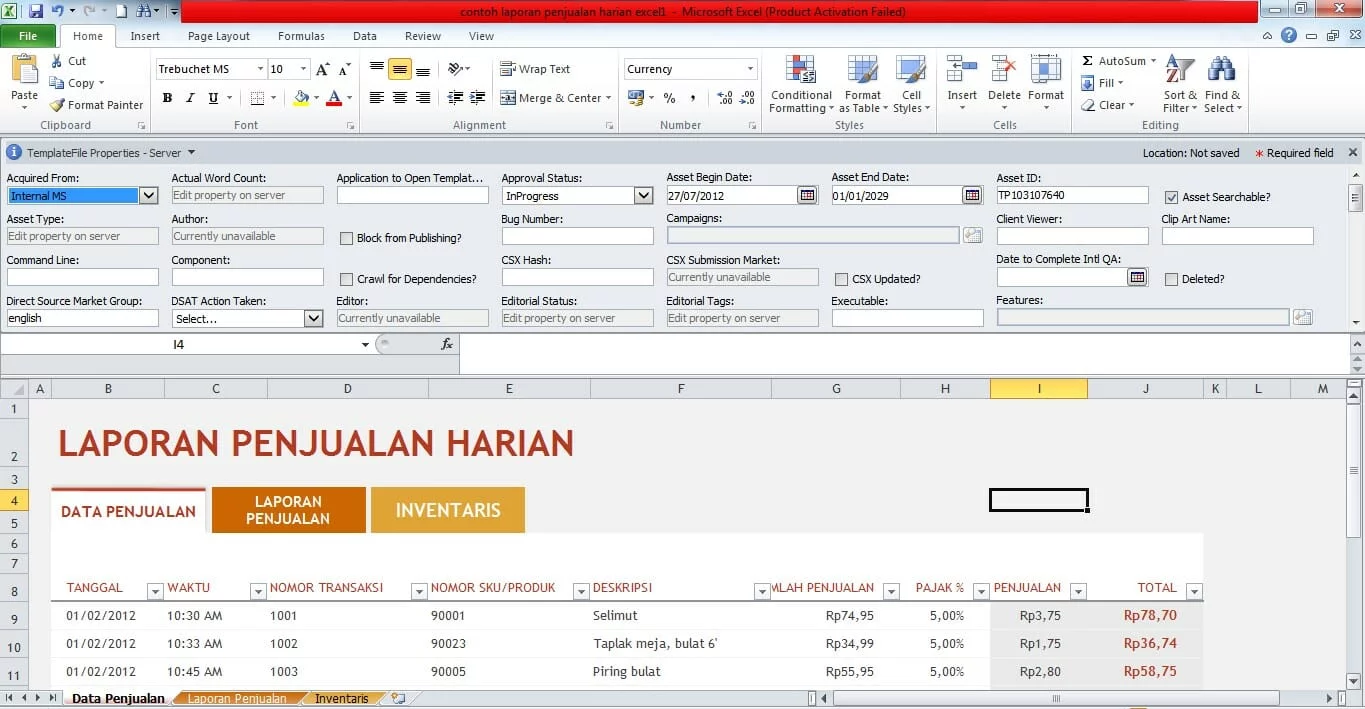
Think of each day as a story with different chapters and scenes. The Daily Sales Report serves as a diary of your business, documenting all transactions from sunrise to sunset.
We have found that this type of reporting not only helps in monitoring performance, but also inspires motivation and a sense of responsibility among the sales team.
Every transaction, from the smallest to the largest, is recorded in detail, including customer name, transaction value, and product name.
2. Sales Report Per Product

Every product has its own story in business. The Sales by Product Report reveals the stories behind top-selling and least-sought products.
This data is very useful for understanding market tastes and perfecting your product strategy.
We believe that this report can be a guide in product development and innovation.
3. Sales Report Per Customer
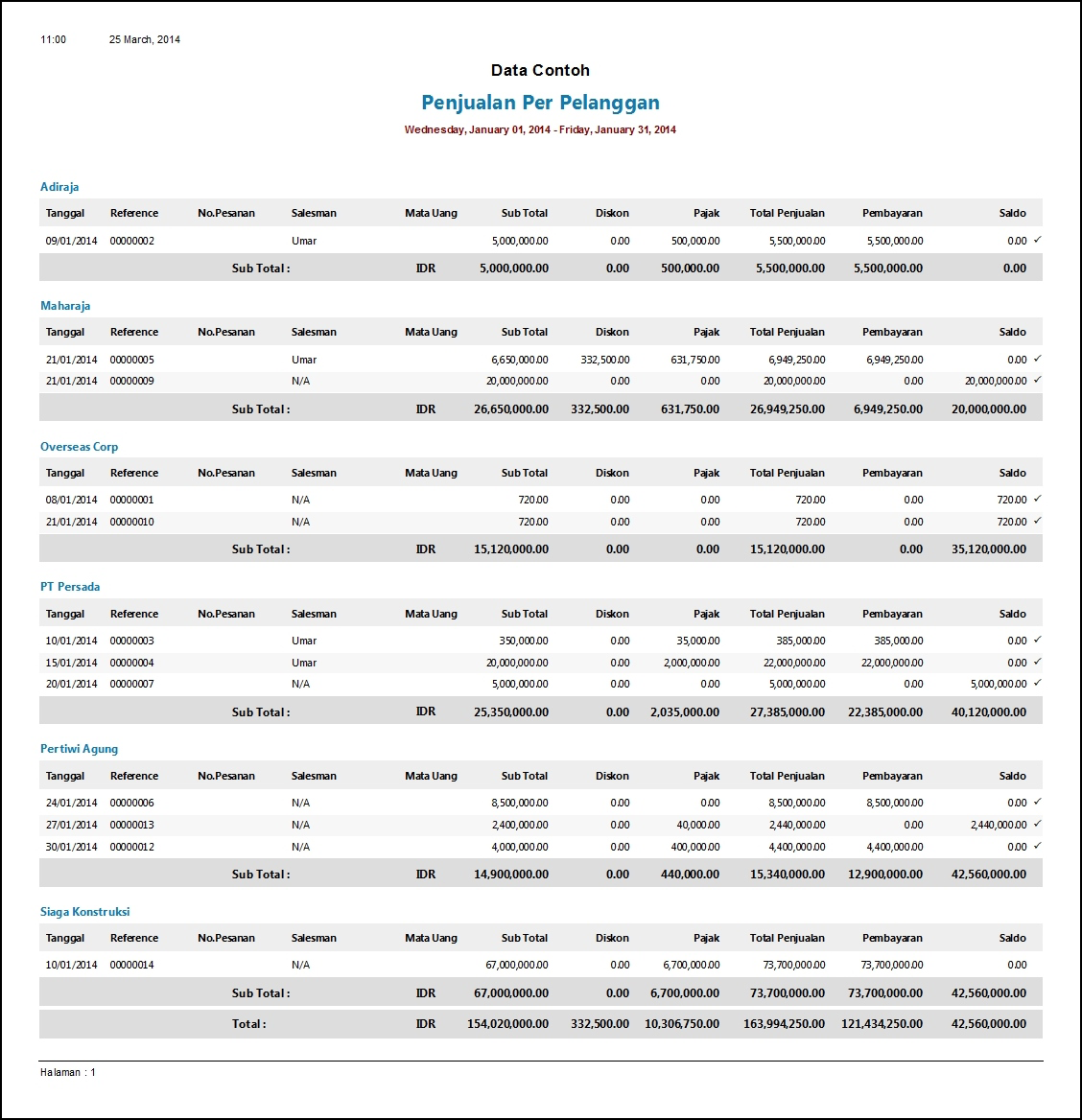
Customers are the main characters in the sales drama. The Sales Per Customer report provides insight into who your loyal customers are and their preferences.
We emphasize the importance of using this information to improve customer satisfaction and design engaging loyalty programs.
4. Sales Report Per Sales
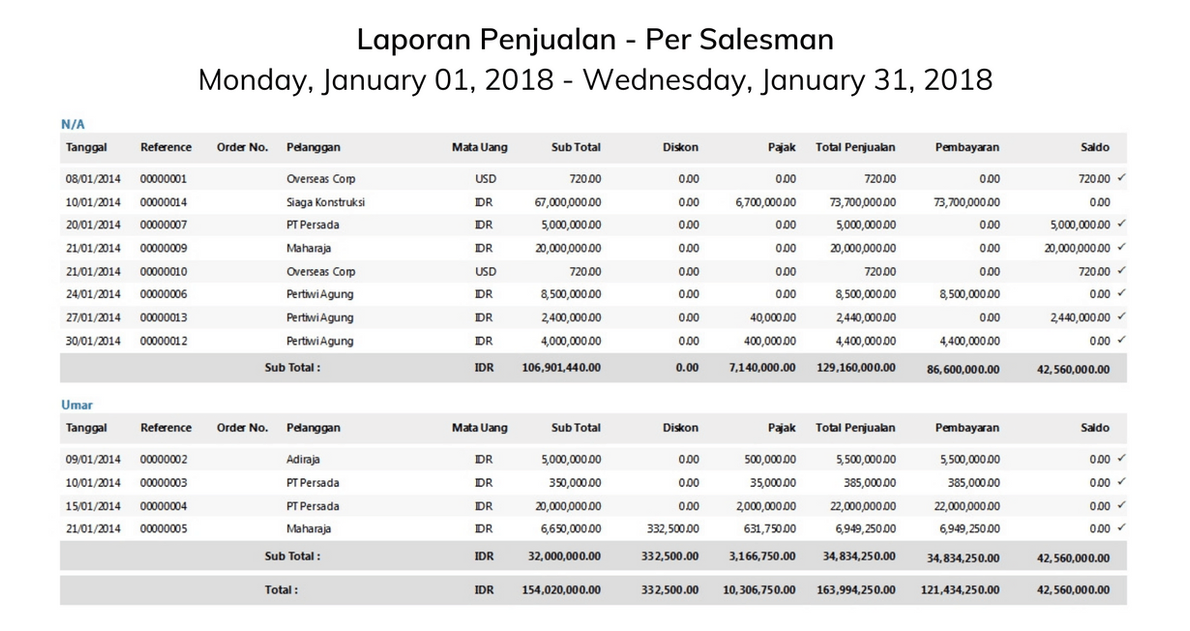
Every member of your sales team is a star in your business’s epic. The Sales Per Sales Report highlights their individual contributions to overall success.
Using this report, we suggest you can celebrate achievements, provide constructive feedback, and design motivating incentives.
Sales reports are essential tools that illuminate every aspect of your business, from customer insights to strategy optimization. However, to fully utilize their potential, you need the right tools.
This is where Labamu comes in. With its advanced Reporting feature, Labamu helps you not only create comprehensive sales reports but also interpret the data to make informed business decisions.
Why not take your business to the next level with Labamu? Visit our Labamu page and download the Labamu app now.
For a monthly subscription fee of just Rp 116,000, you’ll gain access to all our features, enabling you to optimize your sales process and easily accept digital payments.
Start your journey to business success today with Labamu, every MSME entrepreneur’s best friend.