
To improve efficiency, businesses need to adopt an organizational structure that aligns with their operational needs. In this article, Labamu will guide you through the definition of organizational structure, its various types, and the benefits it brings to your business. Here’s the full explanation!
Definition of Company Organizational Structure
According to Whatfix, an organizational structure is a hierarchical system that shows the position, roles, and relationships of each employee within a business. It also illustrates how a business operates and is organized.
With a clear organizational structure, every team member knows their responsibilities and whom to report to. This not only improves operational efficiency but also provides clarity for each employee and business unit.
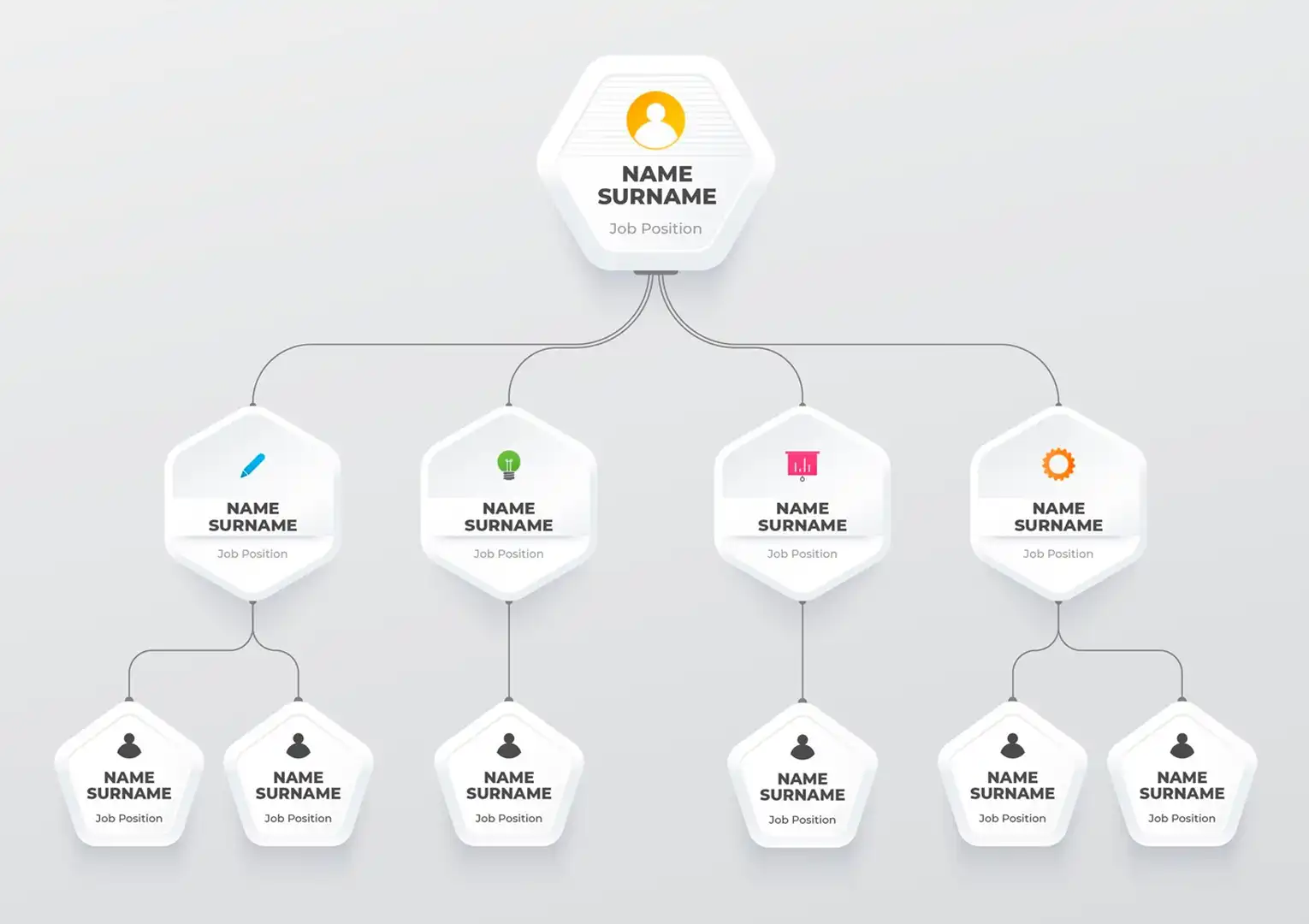
An organizational structure is usually illustrated visually through a chart, where the most “powerful” members of the organization are at the top, and those with less authority are positioned below.
Elements in Organizational Structure Design

A company’s organizational structure is more than just a chart—it symbolically represents many aspects of the business. Here are the elements it aims to illustrate.
1. Job Specialization
Job specialization determines how responsibilities are divided among employees based on their job descriptions. It is used to break projects into smaller, more manageable tasks that each employee can easily understand.
2. Departmentalization
Departmentalization groups employees based on their job descriptions, skills, location, or other factors that connect them. In some cases, not all companies divide employees strictly by functional departments; they may also organize them according to other criteria.
3. Chain of Command
The chain of command outlines the flow of instructions and reporting within an organization. In modern approaches, many companies strive to increase employee autonomy to streamline the chain of command and avoid micromanagement.
4. Span of Control
Span of control determines the number of direct subordinates managed by a supervisor. To identify the appropriate span of control, you need to evaluate the leader’s capacity, the size of the workplace, and the employees’ level of experience.
5. Formalization
Formalization determines the extent to which business processes, policies, and job descriptions are standardized. It also represents the unwritten rules that influence communication patterns between employees and managers, workplace culture, operational procedures, and more.
Types and Examples of Company Organizational Structures
There are many types and examples of company organizational structures that can be implemented. However, in this article, Labamu will focus on seven of the most commonly used organizational structure examples.
1. Functional Structure
A functional structure groups employees into different departments based on their job specializations. Each department has an appointed leader who manages the team.
2. Divisional Structure
In a divisional organizational structure, a company is divided into several business units, each having full control over its budget, resources, and strategy. This structure is most commonly used by large companies with multiple product lines, operations across different geographic regions, multiple market segments, and services spanning various industries.
3. Matrix Structure
In a matrix organizational structure, team members report to multiple managers simultaneously. This allows for broader collaboration and faster project completion. However, companies using this structure need to find ways to avoid confusion over authority and prevent conflicts between managers.
4. Team-Based Structure
A team-based organizational structure creates small teams that focus on specific products or projects. Team members are responsible for managing their own workloads and have full control over the project.
5. Process-Based Structure
A process-based structure is organized according to the company’s workflow rather than traditional departments or functions. In this structure, employees are grouped based on specific processes. It is commonly adopted by the manufacturing industry.
6. Network Structure
This organizational structure goes beyond internal organization by integrating two or more organizations to deliver a single product or service. It is commonly used by companies that outsource work to freelancers, contractors, or independent vendors.
7. Flat Structure (Flatarchy)
A flat structure is typically used by small businesses and startups. There are few middle managers between employees and top management. However, most companies that adopt this structure transition to other types of organizational structures as they reach “maturity.”
Benefits of Choosing the Right Organizational Structure
Here are some benefits of implementing the right organizational structure in a company.
1. Faster Decision-Making Process
The right organizational structure can promote efficient information flow and improve communication, enabling faster and more effective decision-making.
2. Improving Operational Efficiency
An efficient organizational structure makes it easier to manage tasks and responsibilities effectively. When employees have a clear understanding of their roles, they can work more quickly and contribute to the overall efficiency of the company’s operations.
3. Improve Employee Performance
When employees are assigned specific tasks and responsibilities, they are more likely to excel in their roles. An organized structure provides the guidance necessary for employees to consistently perform at optimal levels.
4. Eliminate Duplication of Work
Dividing employees into teams based on their skills and expertise can reduce the risk of overlapping work. They’ll clearly understand what’s their responsibility and what isn’t.
5. Reducing Employee Conflict
When team members clearly understand their roles and responsibilities, they can focus on their tasks—minimizing distractions and misunderstandings. This clarity fosters a harmonious work environment and prevents potential conflict between coworkers.
6. Produces Better Communication
When responsibilities are clearly defined, employees can better understand who to contact with specific issues. This clarity fosters efficient communication and collaboration across the organization.
7. Maintain Consistency Across Business Locations
For business owners, implementing an organizational structure is crucial for maintaining consistency across locations and business units. This ensures everyone adheres to the same procedures, as owners cannot personally oversee each location.
That concludes our discussion of examples of company organizational structures. If, as a business owner, you want to implement a similar approach, make sure it aligns with your needs and the type of business you run.
We hope this is helpful and don’t forget to download the Labamu app on Google Play or the App Store to improve your business efficiency!