Grow Faster
AI for businesses is no longer an expensive technology reserved for large companies. As we enter 2026, artificial intelligence has become increasingly relevant and accessible to MSME owners.
From assisting with marketing and serving customers to managing daily operations, AI serves as a practical solution for businesses aiming to grow faster, operate more efficiently, and stay competitive.
In the past, using AI was associated with complex systems and large investments. Today, however, many AI-based tools are available as simple software, with monthly subscriptions, and some even free.
This is why AI presents a huge opportunity for MSMEs to scale up without having to add a lot of staff.
What Is AI for MSME Businesses?
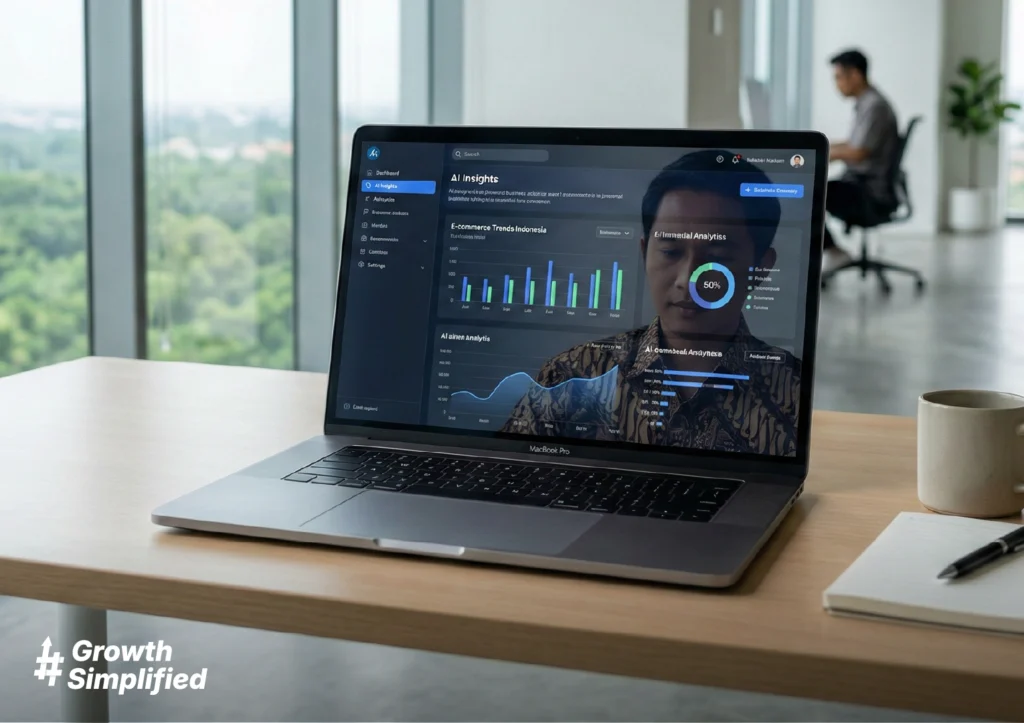
Simply put, artificial intelligence (AI) is a technology that enables computer systems to perform tasks that typically require human intelligence, such as understanding language, recognizing patterns, analyzing data, and making decisions.
In the context of AI for MSME businesses, this technology is used to assist daily tasks, making them faster and more accurate.
Examples include chatbots for responding to customer messages, automated sales analysis systems, and tools that help create promotional content.
However, it’s also important to understand that using AI still requires careful planning to achieve optimal results.
What Are the Benefits for MSMEs
Entering an increasingly competitive digital era, AI offers numerous strategic advantages for MSMEs.
For example, productivity increases because AI can handle repetitive tasks, such as data entry, transaction recording, or content scheduling. This allows you and your team to focus on business development and strategy.
From a cost perspective, AI helps detect errors more quickly, such as duplicate transactions or mismatched inventory. This can prevent losses and improve operational efficiency.
Customer experience also improves.
AI-powered chatbots allow businesses to serve customers even outside of operating hours. Quick and consistent responses make customers feel valued while also boosting trust in your brand.
Moreover, AI opens up new growth opportunities. By analyzing customer behavior patterns, you can identify which products are most popular, the best times for promotions, and the most effective sales strategies.
Challenges of Adopting AI for Businesses
Although promising, implementing AI in small and medium-sized businesses still comes with challenges.
One key consideration is the quality of the data used. AI operates based on data, so if the data is inaccurate or outdated, the results can be misleading.
In addition, there are challenges related to implementation costs and the required skill sets.
Some AI tools require customization and training, especially if there isn’t an internal team familiar with digital technology. Ethical issues and data security are also important concerns, particularly when handling customer data.
Therefore, MSMEs need to choose AI solutions that align with their business needs, rather than just following trends.
Examples of AI Applications in Various MSME Areas
AI usage in business isn’t limited to a single area. Here are several key areas where MSMEs can optimize operations with AI support.
1. Marketing and Promotion
In marketing, AI is highly useful for content creation. Tools like ChatGPT, Adobe Firefly, or AI-based design platforms allow you to create social media captions, blog articles, promotional emails, and ad visuals more quickly.
Additionally, AI can analyze the performance of your content and ads, helping you identify the most effective strategies. Some tools can even predict the best posting times and potential content engagement.
2. Customer Service and Chatbots
Chatbots are one of the most popular AI applications for MSMEs. With a chatbot, you can answer common customer questions—such as operating hours, price lists, or order status—without responding manually to each inquiry.
Modern chatbots can also integrate with CRM systems, keeping a well-organized record of customer interactions that can be used for future sales strategies.
3. AI for Business Customer Management (CRM)
AI in CRM systems helps analyze customer behavior, such as purchase frequency and transaction value. Based on this data, the system can provide personalized promotion or offer recommendations.
This approach makes customers feel more valued while also increasing the chances of repeat orders.
4. Operations and Finance
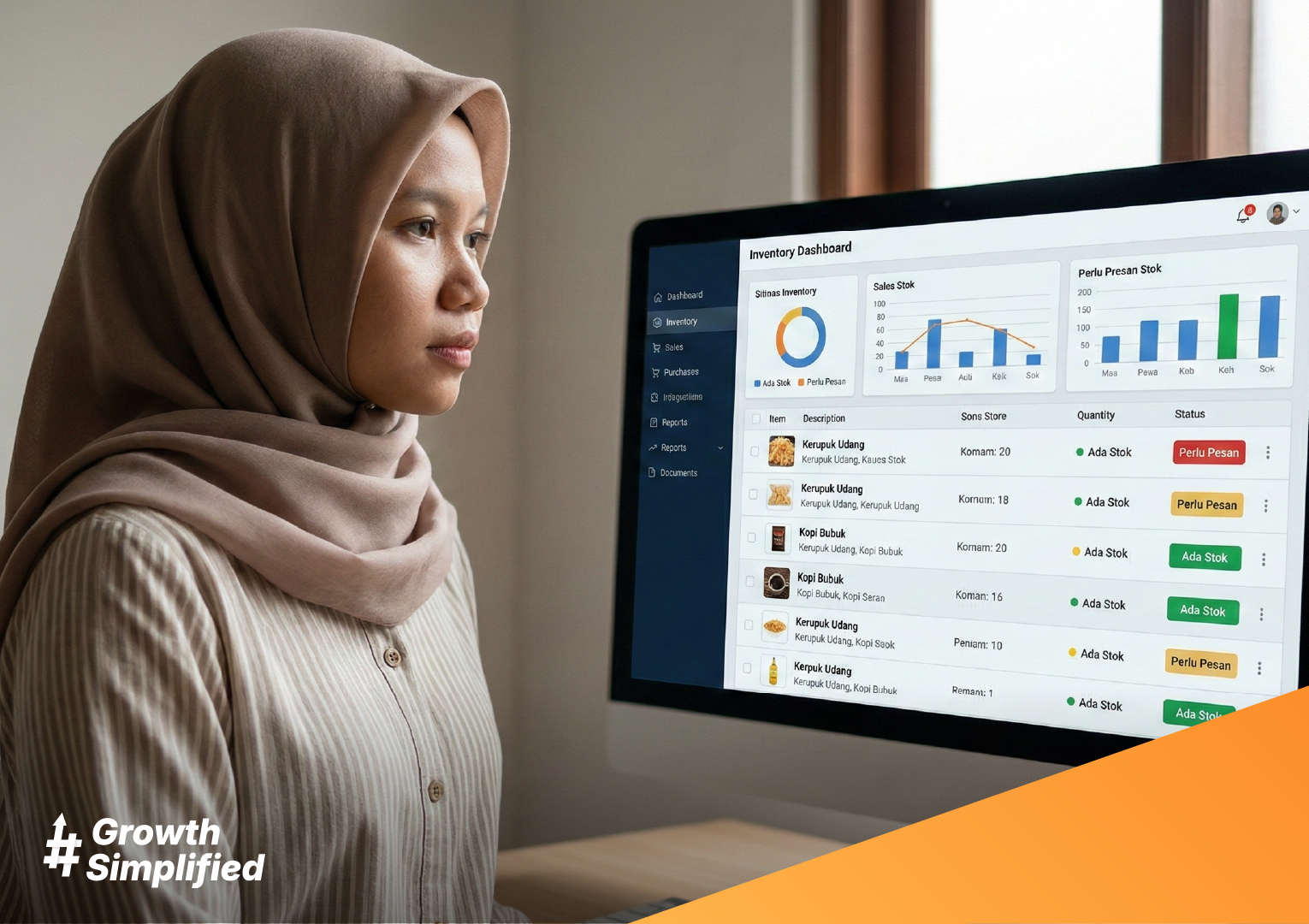
In operations, AI can assist with transaction recording, inventory management, and cash flow analysis. AI-based systems can detect anomalies in financial data and provide early warnings.
For MSMEs, this is crucial for maintaining business health and avoiding critical mistakes in financial management.
5. Recruitment and Administration
The employee selection process can also be assisted by AI. Some tools can screen CVs based on specific criteria, allowing you to focus on the most suitable candidates.
Additionally, AI can be used for meeting transcription, note-taking, and managing daily tasks.
How to Implement It Effectively
To ensure AI delivers real positive impact, it should be implemented gradually.
Start by identifying processes that are most time-consuming or prone to errors. Then, research AI tools that fit your business needs and scale.
Involve your team from the start so they understand the purpose of using AI. Also, provide brief training to ensure the tools are used to their full potential.
Finally, don’t forget to continuously monitor system performance and adjust it according to your business developments.
Optimize Your Operations with Labamu’s POS System
If you want to start implementing AI and digital technology in your operations, Labamu’s POS system is the perfect solution for MSMEs.
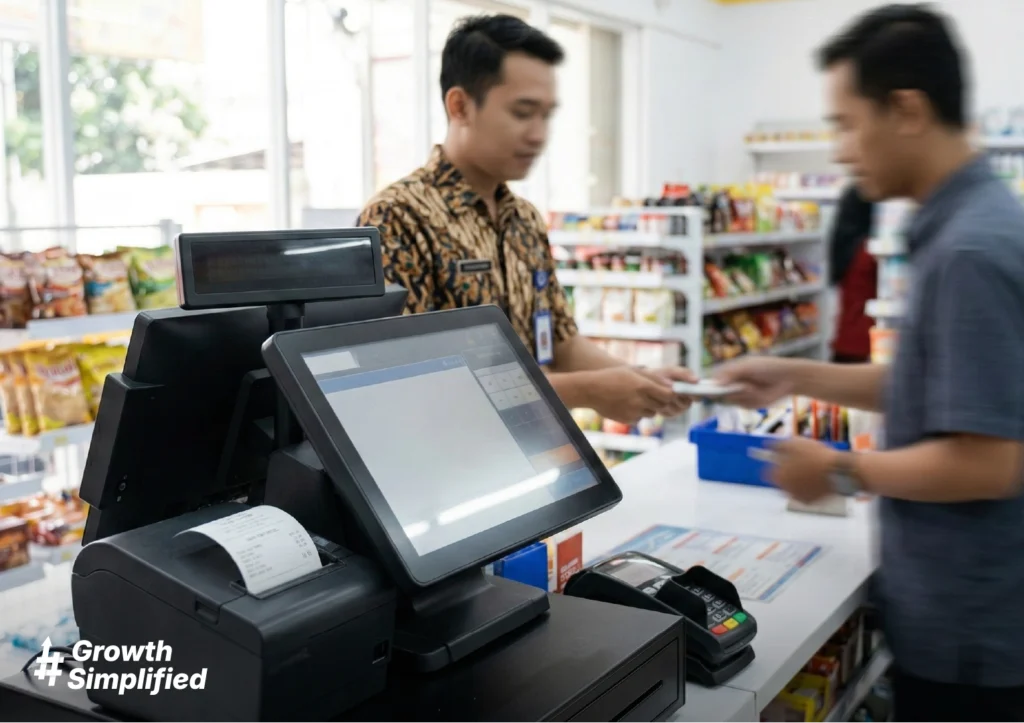
Labamu offers a digital cashier system designed to speed up transactions and simplify daily business management. With a simple and intuitive interface, Labamu’s POS system is easy to use, even for beginners.
For food businesses, this system integrates directly with the kitchen, allowing each order to be processed quickly and with minimal errors. Additionally, Labamu provides automatic sales reports and real-time inventory management.
You no longer need to record data manually or guess your business performance, as all information is neatly organized and accurate. You can even manage your business directly from a browser without downloading any additional apps.
With additional features like ingredient management, invoice creation, promotional offers, and order management, this system helps MSMEs work more efficiently, professionally, and stay competitive in the AI-driven business landscape of 2026.
It’s time to switch to Labamu’s POS system—a smarter solution to help your business grow faster and stay fully under control!