

Belakangan ini, nilai tukar rupiah terhadap dolar Amerika Serikat kembali menjadi sorotan. Banyak pemberitaan menyebutkan bahwa rupiah melemah. Tentu saja situasi ini tentu menimbulkan kekhawatiran, terutama bagi pelaku usaha.
Tapi sebenarnya, apa sih arti dari “rupiah melemah”? Apakah ini hanya berdampak pada perusahaan besar atau juga bisa memengaruhi usaha kecil dan menengah? Yuk, simak pembahasannya di sini, Sahabat Labamu!
Why Does the Rupiah Exchange Rate Weaken?

Before discussing why the rupiah is weakening, it would be good for Labamu Friends to first understand what the exchange rate or exchange rate is.

Simply put, an exchange rate is the price of one country’s currency when exchanged for another country’s currency. For example, if you want to buy 1 US dollar and the current price is Rp16,500, the dollar-to-rupiah exchange rate is Rp16,500. So, you need to exchange Rp16,500 to get 1 dollar.
This exchange rate is important because it influences many aspects of economic activity, from purchasing imported goods and repaying foreign debt to the cost of traveling abroad. Western Union also explains that the exchange rate is a crucial indicator of a country’s financial health.
And like the price of goods in the market, this exchange rate can fluctuate daily, depending on the supply and demand for the currency in the global market. If a currency is in high demand, its value can rise (strengthen or appreciate). Conversely, its value can fall (weaken or depreciate).
Now, let’s get to the real situation. According to Tempo, on Friday, May 9, 2025, the rupiah closed at Rp16,520 per US dollar. This was an 18-point decrease from the previous close of Rp16,502. Financial analysts predict this weakening trend will likely continue for some time to come.
So, why has the rupiah weakened so much? Here are some of the main reasons:
1. Interest Rate Hike in the United States
Keputusan Bank sentral Amerika Serikat, The Federal Reserve (The Fed), untuk menahan suku bunganya di level 4,25-4,50% membuat investor global lebih tertarik menempatkan dananya di AS karena dianggap lebih aman dan menguntungkan. Ini membuat permintaan terhadap dolar AS meningkat, sementara mata uang negara lain, termasuk rupiah, jadi kurang diminati—alias melemah.
2. Tingginya Ketidakpastian Global
Konflik geopolitik, ketegangan antarnegara, atau perang dagang di antara negara-negara besar menimbulkan ketidakpastian di pasar global. Hal ini membuat para investor cenderung menghindari risiko dengan menarik investasinya dari pasar negara berkembang seperti Indonesia. Ini juga membuat permintaan terhadap rupiah menurun dan nilai tukarnya ikut melemah.
3. Peningkatan Permintaan Dolar di Dalam Negeri
As the middle of the year approaches, many Indonesian companies make foreign debt payments and dividend payments to foreign investors. These payments are mostly made in dollars, driving up demand for them. As dollars become more sought after, their price rises—and the rupiah weakens accordingly.
4. Decline in Commodity Exports
As the prices of several key export commodities in Indonesia have fallen, export revenues have also declined. This has led to a decline in the domestic dollar supply, ultimately depressing the rupiah exchange rate even further.
5. Domestic Policy Uncertainty
Controversial government policies, such as the ratification of the TNI Bill and changes to state fund management, have raised concerns and made investors hesitant to invest in Indonesia. For example, LG withdrew its USD 7.7 billion investment from its electric vehicle battery development project last April. This led to an outflow of foreign capital—and further pressure on the rupiah exchange rate.
In conclusion, if the dollar exchange rate rises, the rupiah exchange rate is weakening. This means that the strengthening of one currency will weaken the other.
If the Rupiah Weakens, What Impact Will It Have on Business?
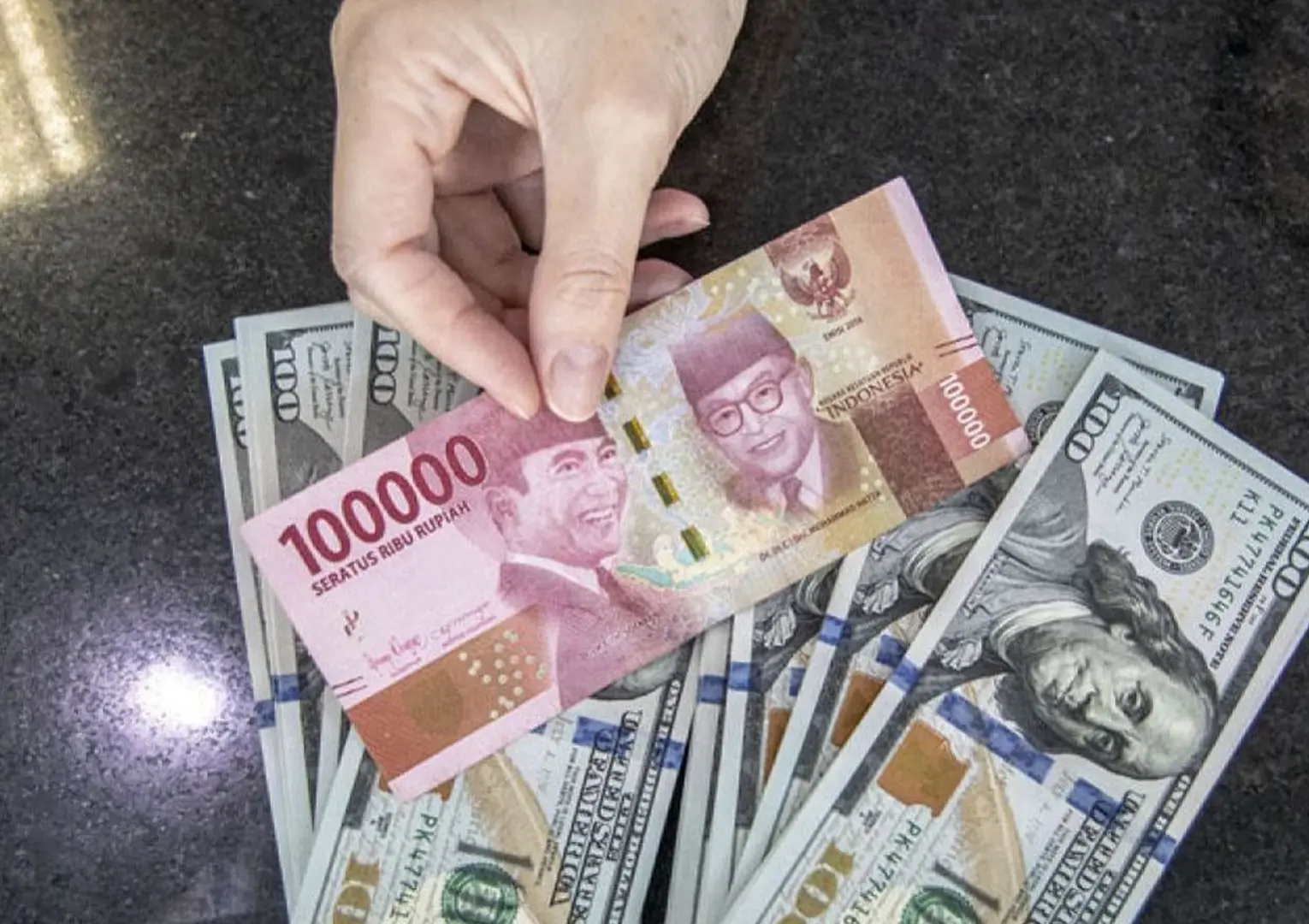
For MSMEs, the weakening rupiah exchange rate is more than just a number in the economic news. It can have a real impact on your business. However, behind this challenge, there are also opportunities that can be exploited if entrepreneurs can adapt quickly. Therefore, understand the main impacts below.
1. Increase Production Costs
When the rupiah weakens, imported goods become more expensive. If your business uses raw materials, components, or equipment from abroad, production costs will automatically increase.
If not adjusted immediately, this could cause profit margins to shrink or even result in losses.
2. Makes Selling Prices Unstable
As a business owner, you may have to raise your selling prices to offset rising production costs. However, on the other hand, people’s purchasing power is also under pressure due to rising prices of basic necessities.
When consumers are not ready to accept new prices, sales can fall and businesses can be disrupted.
3. Creating Heavy Pressure on Domestic Industry
The weakening rupiah could be a double blow to local industry. On the one hand,
On the other hand, businesses targeting exports may be able to exploit this “loophole.” While still dependent on imported raw materials, exporters can offset their production costs with the benefit of a higher exchange rate.
4. Creating Opportunities for Local Products
The weakening rupiah isn’t always a bad thing; it also has a positive side. As imported goods become more expensive, consumers begin to seek alternatives to local products. For example, choosing local fruit instead of imported ones. If leveraged effectively, this could be a significant opportunity for local MSME producers to expand their markets.
Namun tetap perlu diwaspadai karena tidak semua produsen lokal langsung diuntungkan. Jika bahan baku masih bergantung pada impor, maka kenaikan biaya produksi bisa menekan margin keuntungan dan membuat harga jual ke luar negeri menjadi kurang kompetitif.
5. Dollar-Based Businesses and Exporters Can Benefit
For some businesses, the weakening rupiah can actually be an opportunity. For example, for MSMEs that accept payments in dollars, such as exporters, craft, fashion, food, or digital product producers serving overseas markets.
A higher exchange rate makes dollar income greater when converted to rupiah.
Tantangan dalam mengelola keuangan bisnis memang nyata adanya. Sayangnya, tidak semua faktor bisa kamu kendalikan. Salah satunya adalah melemahnya nilai tukar rupiah terhadap mata uang asing. Meski begitu, bukan berarti kamu tak bisa beradaptasi.
With a well-organized and structured business management system, you can overcome any obstacles in growing your business. One way to do this is by ensuring your cash flow is healthy and properly recorded.
This is where a business management app like Labamu comes in handy. From recording daily transactions and monitoring inventory, to managing your profit and loss reports, to managing staff and marketing campaigns—you can monitor everything in one app. Download the app now from Google Play or the App Store. and feel the benefits!