
Total Cost of Ownership (TCO) not only considers the purchase price of a product but also all long-term costs associated with it. By understanding this concept, both companies and individuals can make wiser decisions before investing. Therefore, understanding and calculating TCO is a crucial step in financial management and business strategy. Let’s explore the full details!
What is Total Cost of Ownership?
Total Cost of Ownership (TCO) is a financial concept that calculates all costs associated with a product or asset throughout its lifecycle.
According to Indeed, TCO covers every phase, from acquisition, use, operation, maintenance or repair, renewal, to asset disposal. That way, the TCO calculation provides a more realistic picture than just looking at the initial purchase price.

Investopedia also emphasizes that TCO also takes into account indirect or hidden costs. Dengan kata lain, TCO membantu kamu melihat nilai suatu aset secara menyeluruh.
For example, software with a high initial price might be more cost-effective because it offers free maintenance, compared to a cheaper alternative that incurs many additional costs later on.
Benefits of Calculating Total Cost of Ownership
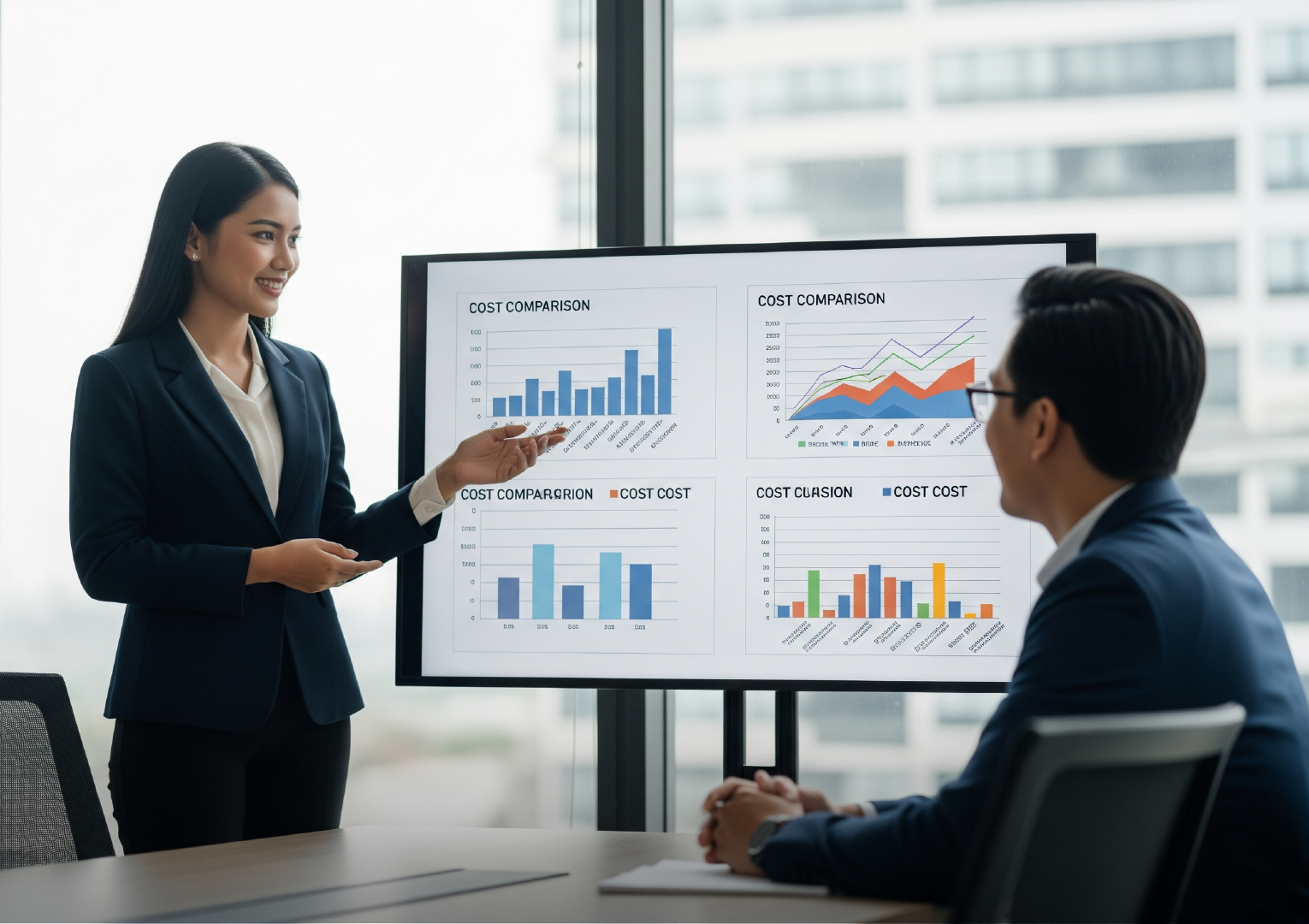
By understanding all long-term costs, businesses can make smarter decisions and avoid unexpected expenses in the future. Here are some key benefits of calculating TCO.
1. Making More Informed Purchasing Decisions
By calculating TCO, you can compare the long-term value of various options. This helps avoid decisions that solely focus on the initial price.
2. Identifying Cost-Saving Opportunities
A comprehensive calculation ensures all costs, including maintenance, spare parts, and operational expenses, are accounted for. Thus, businesses can identify areas where costs can be reduced without compromising quality or performance.
3. Supporting Strategic Planning and Budgeting
Understanding TCO enables more robust financial planning and appropriate resource allocation. This information helps businesses plan future investments, optimize operations, and improve overall efficiency.
4. Comparing Vendors or Products More Objectively
With TCO, comparisons between products or service providers are not solely based on initial price, but also on long-term costs, implementation efficiency, and usage flexibility. This ensures that the chosen option provides the best ROI for the business.
5. Reducing the Risk of Unexpected Costs
TCO calculation helps anticipate the emergence of hidden or unexpected costs throughout a product’s lifespan. Thus, businesses can avoid “surprises” that could disrupt operations and budgets.
How to Calculate Total Cost of Ownership
As mentioned, TCO calculation includes all costs throughout its lifespan. Thus, you can assess the true value of the investment and make more informed decisions.
The cost components calculated in TCO include:
- Acquisition costs: Initial costs for purchasing a product or service.
- Implementation costs: Costs for installation, setup, and training related to product usage.
- Operational costs: Ongoing costs such as energy, labor, and consumables.
- Maintenance costs: Costs for repairs, updates, and ongoing support.
- End-of-lifecycle costs: Costs for disposing, recycling, or replacing the product.
- Costs of poor quality: Losses due to non-compliance or delays in processes.
- Usage costs: Value of usage, operations, and related services throughout the lifespan.
- Miscellaneous costs: Transportation, storage, taxes, depreciation, and other related costs.
Thus, the TCO formula can be formulated as follows:
TCO = Acquisition Costs + Costs Incurred During Product Lifecycle
To better understand, you can study the following illustration. Untung Company is currently presented with management platform offers from two different vendors.
| Vendor A | Vendor B | |
| Implementation Costs | 12.500.000 | 8.000.000 |
| Training | 350.000 | 500.000 |
| Customization | 3.500.000 | 3.500.000 |
| Cloud Storage | Free | 2.500.000 |
| Lifespan | 5 Years | 5 Years |
If the lifespan of this platform is 5 years, then Vendor A’s TCO:
TCO = 12,500,000 + ((350,000 + 3,500,000 + 0) x 5 years)
TCO = 12,500,000 + (3,850,000 x 5)
TCO = 12,500,000 + 19,250,000
TCO = 31,750,000 (or annual cost of 6,350,000)
Meanwhile, the TCO calculation for Vendor B is as follows:
TCO = 8,000,000 + ((500,000 + 3,500,000 + 2,500,000) x 5 years)
TCO = 8,000,000 + (6,500,000 x 5)
TCO = 8,000,000 + 32,500,000
TCO = 40,500,000 (or annual cost of 8,100,000)
Thus, although Vendor B’s initial price is lower, the long-term TCO shows that Vendor A provides better value for Untung Company.
Challenges when Calculating Total Cost of Ownership

In practice, calculating TCO is not always as simple as adding the purchase price to other miscellaneous costs. There are several difficulties that need to be considered to ensure the calculation is truly accurate and reflects the actual costs. Here are some key challenges when calculating TCO.
1. Hidden Costs
Besides the purchase price, other costs may arise, such as training, annual subscription fees, insurance, or management fees that might not be immediately detectable at the outset. However, ignoring these costs can make TCO calculations far from reality.
2. Labor Costs
Increases or decreases in labor costs significantly affect TCO. For example, purchasing new equipment might seem expensive, but if its operations are more efficient and require fewer staff, this can lower the overall total cost.
3. Impact of Payment Methods
Payment methods, such as cash, credit card, or loan, may add additional fees. For example, interest costs and payout percentages can make TCO higher than initially estimated.
4. Cost Changes Throughout Product Lifespan
Maintenance, repair, or upgrade costs can increase with the age of an asset. Estimating these changes requires research into product lifespan and brand quality.
5. Market Conditions and Technological Changes
Spare part prices, industry standards, or technological innovations can unexpectedly affect TCO. Rapid changes in certain sectors, such as logistics or technology, make TCO calculations more complex.
By understanding these challenges, you can be more careful in calculating TCO and anticipate costs that may arise in the future.
To make business management easier and monitor various costs efficiently, you can use Labamu. Download the app now on Google Play or App Store and start controlling business financing smarter.