In today’s competitive business environment, companies are required to identify risks before they actually occur. One widely used method to analyze potential failures in business processes is FMEA. So, what exactly is FMEA and how is it applied in business? Let’s explore it further in this article.
Definition of FMEA
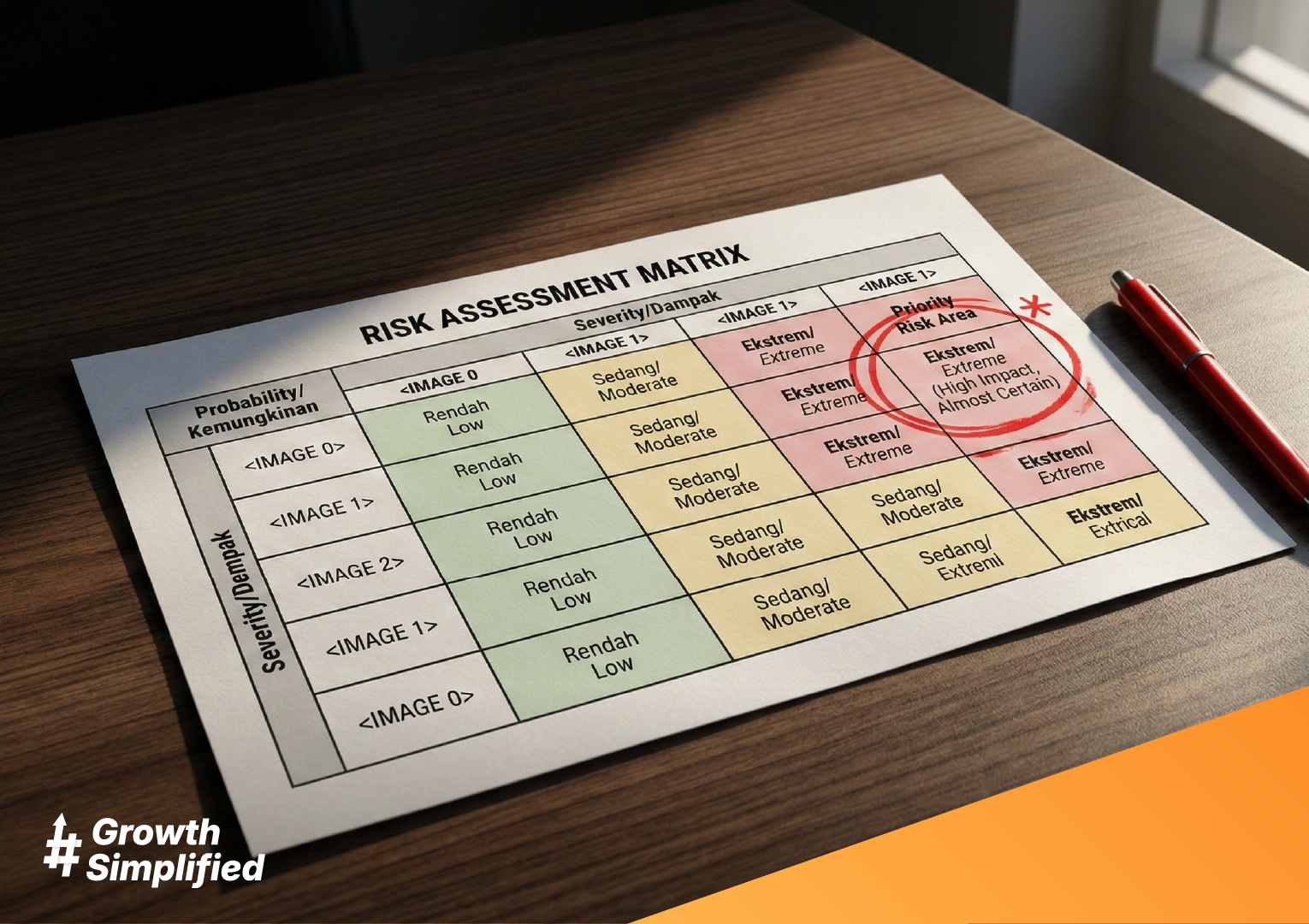
FMEA stands for Failure Mode and Effects Analysis, which is a systematic method used to identify potential failures in a process, product, or system, as well as analyze the effects or impacts caused by those failures.
In simple terms, FMEA is a risk management tool that helps companies anticipate potential problems before they actually occur. This method was first developed in the military and manufacturing industries.
However, it is now widely applied across various sectors, including retail, services, technology, and small and medium-sized businesses (SMEs). In practice, FMEA helps teams to:
- Identify potential failures
- Assess the severity of the impact of failures
- Evaluate the likelihood of failures occurring
- Determine improvement priorities
With its structured approach, FMEA enables companies to take preventive actions, thereby reducing potential financial losses and protecting their business reputation.
Objectives of FMEA

Not only should you understand that FMEA is a systematic failure analysis method, but you should also know its objectives for a company. FMEA serves as a strategy that helps improve both quality and operational efficiency. Here are the main objectives of FMEA:
1. Identify Potential Risks Early
The primary objective of FMEA is to identify potential failures before they actually occur. In business, risks can arise from various aspects, such as operational errors, inaccurate systems, financial record mistakes, or suboptimal customer service.
With FMEA, companies can map out vulnerable points within their business processes. For example, in the retail sector, potential failures may occur in stock recording, cashier transactions, or unsynchronized sales reports. Early identification allows companies to take preventive actions more quickly and cost-effectively than fixing issues after they occur.
2. Reduce the Impact of Financial Losses
Every failure in business almost always affects finances. Even small errors in record-keeping or report analysis can lead to significant losses.
FMEA helps companies assess the severity of a risk. By identifying which risks have the greatest financial impact, management can prioritize improvements in those areas first. This approach ensures that resources are used more effectively and strategically.
3. Improve Product and Service Quality
Business competition is becoming increasingly intense, and quality has now become a key differentiating factor. FMEA supports companies in continuously evaluating internal processes to enhance the quality of both products and services.
When potential failures are successfully minimized, quality consistency improves. This not only enhances customer satisfaction but also strengthens customer loyalty and the brand’s reputation in the market.
4. Enhance Operational Efficiency
FMEA not only focuses on major risks but also on inefficient processes. By analyzing potential failures, companies can identify redundant, ineffective, or waste-prone processes. As a result, business operations become leaner, faster, and more productive.
FMEA Implementation Method
After understanding that FMEA is a strategic risk analysis method, the next step is to learn how to apply it in business. FMEA is implemented systematically through several key stages. Here is the common method for applying FMEA:
1. Identify the Process or System to Be Analyzed
The first step is to determine which process or system will be analyzed. In a business context, this could include sales processes, cashier systems, inventory management, or financial reporting systems.
Focusing on a specific area is important to ensure the analysis remains targeted and relevant to business objectives. For example, if a business frequently experiences discrepancies in financial reports, the analysis can be concentrated on the transaction recording system.
2. Identify Potential Failures (Failure Modes)
Next, the following step is to identify the various potential failures that may occur. For example:
- Data entry errors
- System errors during transactions
- Sales reports not updated in real-time
- Inaccurate inventory data
At this stage, the team needs to think critically and comprehensively to ensure that all potential risks are thoroughly mapped.
3. Analyze the Effects of Failures (Effects Analysis)
Every failure inevitably has an impact. Therefore, the next step is to analyze the effects of each identified potential failure. The impacts may include:
- Financial losses
- Loss of customers
- Damage to reputation
- Operational disruptions
This assessment typically uses a specific scale to measure the severity of each impact.
4. Assess Risk Levels (Risk Priority Number – RPN)
In FMEA, risks are typically calculated using the Risk Priority Number (RPN), which is determined by multiplying three main factors:
- Severity (level of impact)
- Occurrence (likelihood of occurrence)
- Detection (ability to detect before it occurs)
The higher the RPN value, the higher the priority of that risk for immediate attention.
5. Determine and Implement Corrective Actions
Finally, develop an action plan to reduce or eliminate risks with the highest RPN values. These actions may include:
- System improvements
- Employee training
- Implementation of more accurate technology
- Automation of business processes
In today’s digital era, many companies leverage technology to minimize the risk of errors, especially in transaction recording and business report analysis.
Optimize Business Risk Analysis with Technology

Understanding that FMEA is a crucial method in business risk management, you should ensure your business has systems that support data-driven analysis and decision-making.
One of the most effective ways to minimize operational risks is by using a point-of-sale (POS) application equipped with automatic report analysis features. With an integrated system, you can:
- Monitor sales in real-time
- Analyze financial reports more accurately
- Reduce the risk of recording errors
- Identify business trends more quickly
Use the Labamu POS app, which features Report Analysis, to help you make more accurate, data-driven business decisions. With the right system in place, implementing FMEA in your business becomes more effective, measurable, and directly impactful on your company’s growth.