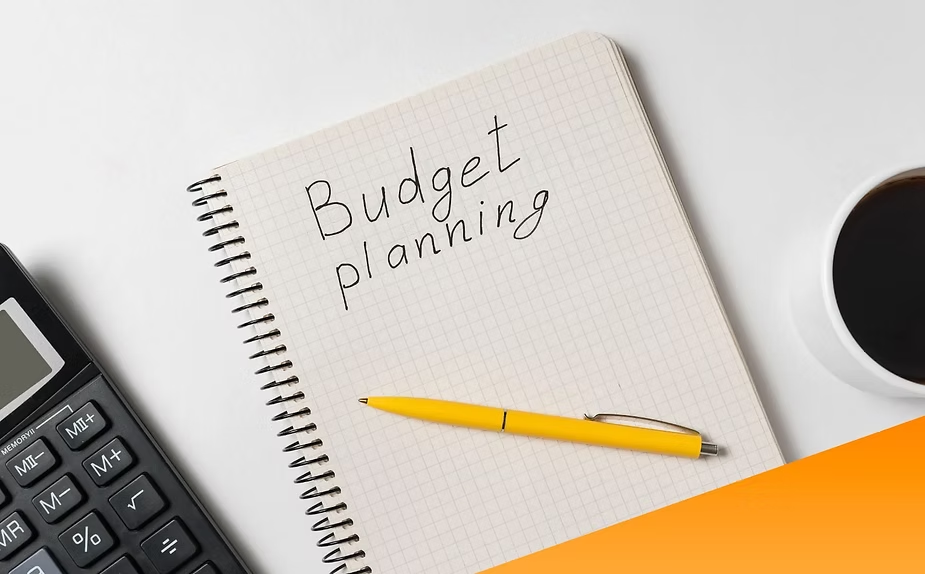
The Cost Budget Plan (RAB) is an important tool in project management that is used to plan and control expenses. Therefore, it is important to know how to create an effective RAB.
Whether in a construction project, business or event, RAB can also help ensure that all costs are controlled and the project runs within budget.
Keep reading this article to find out what the benefits are and a practical guide on how to make the right RAB.
Definition of RAB

So, RAB is a document that contains information about detailed calculations of the estimated price or cost of requirements for a project or activity.
The detailed calculations in the RAB can be different, but they are made according to the needs of the parties involved, including agencies and groups.
Even though you focus on numbers for each need, there are several other things you still need to pay attention to when creating a RAB, especially for large-scale companies.
Actually, RAB is a draft budget based on estimated prices, not from actual prices or total expenses.
This plan was created with the aim of facilitating the provision of resources used for project implementation.
Apart from that, you also need to know that preparing or creating a RAB is important when submitting offers to clients or carrying out operational activities.
RAB function

Before knowing how to make a RAB, make sure you understand the function of making this budget draft, including:
1. Control expenses
Both for business operations and project implementation, RAB has a very important role in managing expenses. The budget estimate written in the RAB can be a company guide so that expenditure costs are not too large.
In addition, if excess spending occurs, the company can achieve the best strategy to ensure financial conditions remain stable.
2. Financial planning
By having cost estimates for each need, companies can also prepare financial plans more precisely. Through detailed expenditure estimates written on the RAB, companies can also ensure the availability of funds to meet all needs.
In this way, project activities can proceed according to plan and the allocation of funds can also be calculated more carefully.
3. Ensure priority financing
Making a budget plan not only helps manage company spending as a whole, but also ensures priority funding. Having a RAB helps project implementers or business management know what needs need attention.
In this way, the availability of materials can be met and in accordance with the budgeted costs.
Benefits of RAB

RAB implementation is actually something that is often encountered by companies planning to create an activity or project. The overall benefits of RAB include:
- More efficient budget creation. The cost planning made at the beginning of a project or activity becomes a guideline for its implementation. Through RAB, extra costs can be followed up immediately and more efficiently.
- Guidelines for decision making. The financing plan that has previously been made will become a reference for making company policies to achieve goals.
- Easier evaluation process. The benefits of RAB also include making activity evaluation easier, especially regarding budgets.
How to Make a RAB

You can actually prepare a RAB easily. Here’s how to make a RAB so that the expenditure budget can be managed effectively and efficiently:
1. Determine the purpose of creating the RAB
The first thing you must pay attention to when creating a RAB is determining what the objectives of the project or activity you want to carry out are. You can use this budget plan for many needs, such as business or projects in general. Setting RAB goals will help make the project run smoothly.
2. Determine the estimated costs required
The next step in making a RAB is to determine the estimated costs you need to meet all the needs for implementing the activity or project.
Make all required cost estimates in detail according to the group, such as how to get the product, location of purchase, or rental process. After that, continue by calculating the total cost range that you need for each of these needs.
3. Resource analysis
Still related to the previous point, carry out an in-depth analysis of all the resources you have written down that relate to project or activity needs. For example, a coffee shop business requires product stock which you can get through wholesale stores.
4. Research prices for each need
The next way to make a RAB is to do price research for each need, of course after you have written down in detail what is needed to implement the project. Make sure you do in-depth research, adapt it to current conditions and information.
Because, prices for necessities that are in line with actual conditions will make expenses more controlled. In this way, the costs you will incur will not be much different from the estimates you made in the RAB.
5. Carry out a recap and evaluation of the RAB
The final step is to recapitulate and evaluate the RAB document that you have created. Make sure you write down all the estimated costs for each need in detail so that you can provide a more accurate picture for all parties involved in the project or activity.
That’s the information about the benefits and how to make a RAB that you need to know to be able to manage the project implementation budget. Apart from making the right RAB, as a business owner, you also have to be able to manage operations more optimally. No need to worry, you can use your profits to manage your business better.
Labamu offers various interesting features that can make business management simpler, but still professional. For example, the POS Cashier feature to manage all transactions, Manage Raw Materials to make it easier to manage all available raw materials, and the Billing and Reports feature.
Come on, maximize your business potential with Labamu!