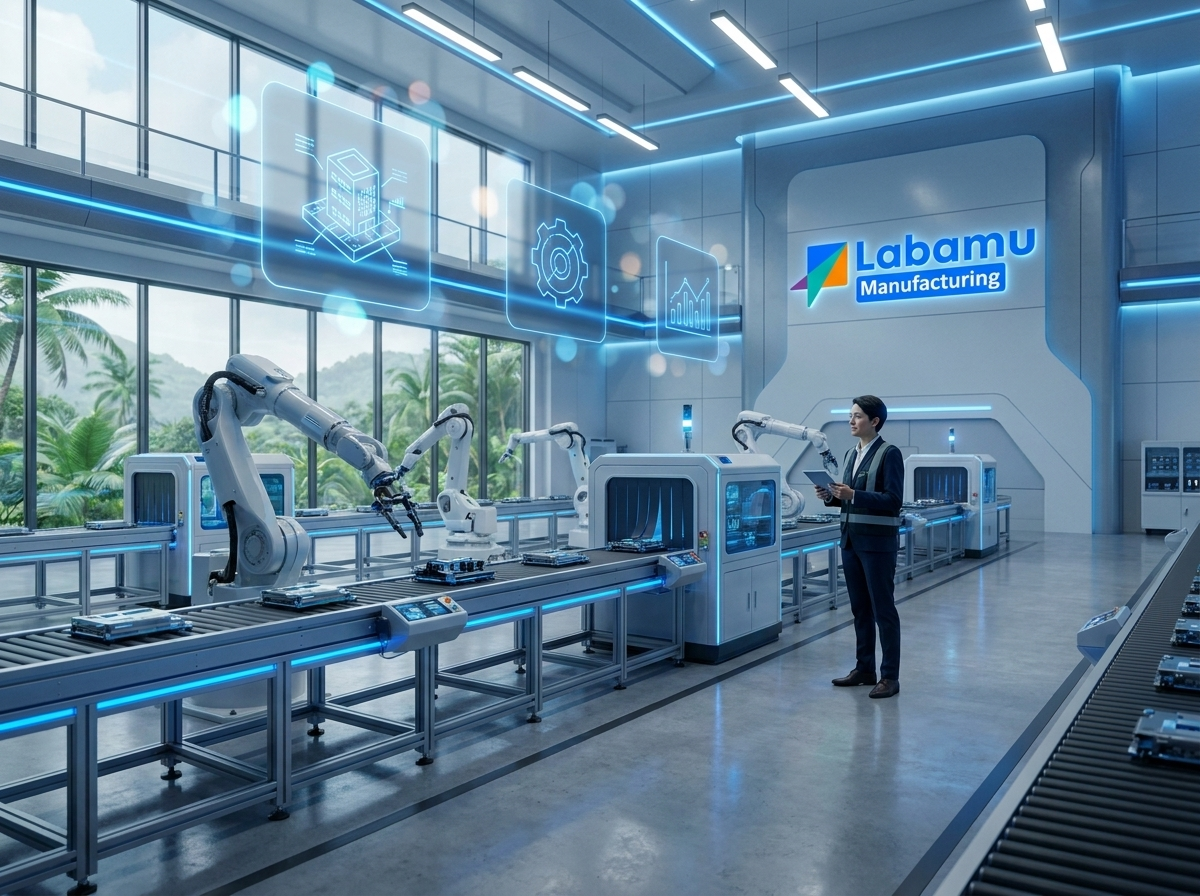
Bill of Materials (BOM) is now easy to manage through Labamu Manufacturing. Every manufacturing business requires precise recording of raw materials. Because a small error in calculating materials can disrupt the entire production.
Does production in your factory often experience stock differences? If so, understanding the materials list is the first step to the solution. Poor raw material management triggers swelling in business capital.
Therefore, digitizing material recording is an urgent need. Let’s learn how this system works to reduce costs. Implementing a structured system will help businesses grow more stably.
- Core Production Recipe: This document contains a complete list of all product raw materials.
- Key to Cost Efficiency: Neat material structure prevents waste of factory budget.
- Automatic Digitization: Managing material lists is now much more practical digitally.
Before entering into an in-depth discussion, make sure you understand the basics of factory operations. You can learn practical production systems through Labamu Manufacturing. Let’s review how this system works now.
Get to know the Bill of Materials (BOM) Method for Production Efficiency
The Bill of Materials (BOM) method is a way of compiling a list of raw materials. This document becomes the main blueprint for assembling the product. Its implementation ensures that the production flow runs more smoothly and regularly.
This method helps control inventory to avoid excess materials. The production team can work faster without any obstacles. Coordination between divisions has also become much easier and more practical.
Every gram of material used will be recorded very neatly. You don’t need to worry about losing profit margins due to waste. This system is proven to increase daily productivity significantly.
A good first step is to equalize the understanding of all teams. That way, the coordination process runs smoothly from upstream to downstream. Production results become more consistent according to company quality standards.
Why Does Conventional Recordkeeping Hamper Factory Efficiency?
Conventional recording damages efficiency because it is prone to human calculation errors. Small errors in manual recording often trigger stock discrepancies. This is of course very detrimental to the daily operations of the factory.
In contrast, modern systems ensure that all material data is integrated automatically. The risk of delays in delivering goods to consumers can be reduced to the maximum. Field staff no longer need to do manual calculations every day.
Implementing standardized methods also makes the periodic financial audit process easier. Transparent data helps management make decisions quickly. Operational cost efficiency can also be achieved more easily.
Differences in the Meaning of Bill of Materials (BOM) in Various Industries
The difference in the meaning of BOM lies in the focus of its use by each division. BOM Engineering focuses on designing product images before production. Meanwhile, Manufacturing BOM focuses fully on the physical assembly process.
You must choose the BOM type according to the factory operational flow. For example, the culinary industry needs dynamic recipes for new menus. The document type must be flexible to follow changes in materials at any time.
Meanwhile, the electronics industry requires very detailed component lists. Each small part must be listed with its own unique code. This is important to avoid installation errors during assembly.
| BOM Type | Main Focus of Use | Key Users in the Company |
| Engineering BOM (EBOM) | Product design & technical specifications | R&D team and product designers |
| Manufacturing BOM (MBOM) | Assembly & physical ingredients list | Production & factory operator |
| Sales BOM (SBOM) | Sales & bundle products | Sales team, cashier, & logistics |
How to Choose the Best BOM Type for Work Efficiency
Choosing the best BOM type starts with adjusting operational needs. The right type of document will speed up product processing time. On the other hand, choosing the wrong document type can hinder team performance.
For example, the assembly team cannot work on design capital alone. They need detailed step-by-step instructions along with physical details of the ingredients. Therefore, Manufacturing BOM is really needed on the factory floor.
Digital systems make it easier to convert designs into real assembly processes. This saves valuable communication time between company divisions. Dangerous miscommunications in the production line can now be completely avoided.
Automatic data synchronization provides a single, common source of truth. All divisions can easily access the latest information in real-time. This step is very crucial to keep your business running smoothly.
How to Make a Bill of Materials (BOM) Systematically
How to create a Bill of Materials (BOM) starts with identifying components. This initial step is crucial so that no ingredients are missed. You must involve the production team to note real needs.
- Define nested numbering levels: Assign a unique code to each component.
- Write clear physical descriptions: Include detailed specifications for each material.
- Enter specific quantities: Specify the amount of materials for one assembly.
- Use standard units of measurement: Use standard units such as kilograms or liters.
- Define lifecycle phases: Provide periodic data status updates.
Making a list in a hurry only creates many new mistakes. Therefore, take special time to design the initial document. Use real field data as the main reference for creating documents.
The precise final result is a reliable reference for the entire line. The manufacturing process is now much more practical thanks to the support of modern applications. The automated system minimizes daily manual data entry time.

Using Bill of Materials (BOM) Templates to Speed Up Work
Bill of Materials templates are ready-to-use patterns for efficiency. The template format minimizes errors in writing data structures from scratch. The work of the factory administration team is completed much more quickly.
Many manufacturing business owners still use conventional paper documents. Unfortunately, manual recording is very prone to damage and instantaneous loss. Simultaneous data access also becomes very difficult.
Using interactive digital templates is much safer in the long run. You can create dynamic templates directly through modern applications. Cloud-based storage keeps data safe from physical damage.
A good template includes item code and description columns. Also include a column for the unit price of materials to make calculations easier. Estimates of total production costs can now be obtained instantly.
Advantages of Dynamic Templates for Factory Product Variations
The advantage of dynamic templates lies in the flexibility of modifying product data. You can replicate this template for other product variants. This process saves valuable time of your factory administration staff.
Now is the time to move from rigid templates to dynamic solutions. A fast administration process will speed up product entry to the market. The competitiveness of your business in the market will certainly increase rapidly.
Modern technology helps simplify previously complex workflows. Your staff can focus on improving the quality of the final product. This smart move brings real efficiencies to daily operations.
Activating Raw Material Management Systems for the Future of Business
Manage Bill of Materials (BOM) & BOM Management must use the cloud. The cloud system ensures updated material data changes in real-time. All company divisions can access the latest data at any time.
The digital management system prevents the loss of important documents due to negligence. Each division monitors material stock availability very easily. Data transparency minimizes internal conflicts due to differences in stock reports.
Labamu provides smart solutions to automate the entire production chain. This advanced feature is specifically designed to advance your manufacturing business. The automation system saves inventory management time by tens of hours.
It’s time for you to move on from manual recording which is very complicated. Immediately develop your factory’s full potential with management technology. The right first steps will determine long-term success.
Develop Manufacturing Business Potential with Labamu Manufacturing
Investments in modern management systems have long-term positive impacts. Your business is ready to compete in the era of rapid industrial digitalization. Customer confidence increases thanks to always correct delivery of goods.
Use the best technological tools for smooth business operations today. A reliable system is the main key to winning market competition. Don’t let competitors get ahead of you in digitizing your manufacturing business. Start managing your factory operations by visiting Labamu Manufacturing now.