

Managing inventory is one of the biggest challenges for MSMEs, especially when capital is limited and storage space is constrained. Many business owners focus heavily on sales, but overlook the fact that poorly managed stock can gradually erode profits.
Slow-moving products, miscounted units, and unrecorded returns can all disrupt your cash flow. That’s why smart, cost-efficient inventory management is a critical foundation for keeping your business financially healthy and positioned for sustainable growth.
The good news is, you don’t need a large warehouse or expensive software to start managing your inventory effectively. What you really need are discipline, transparency, and a system that helps you maintain daily control—without stretching your budget.

Why Is Inventory Management So Important for MSMEs?
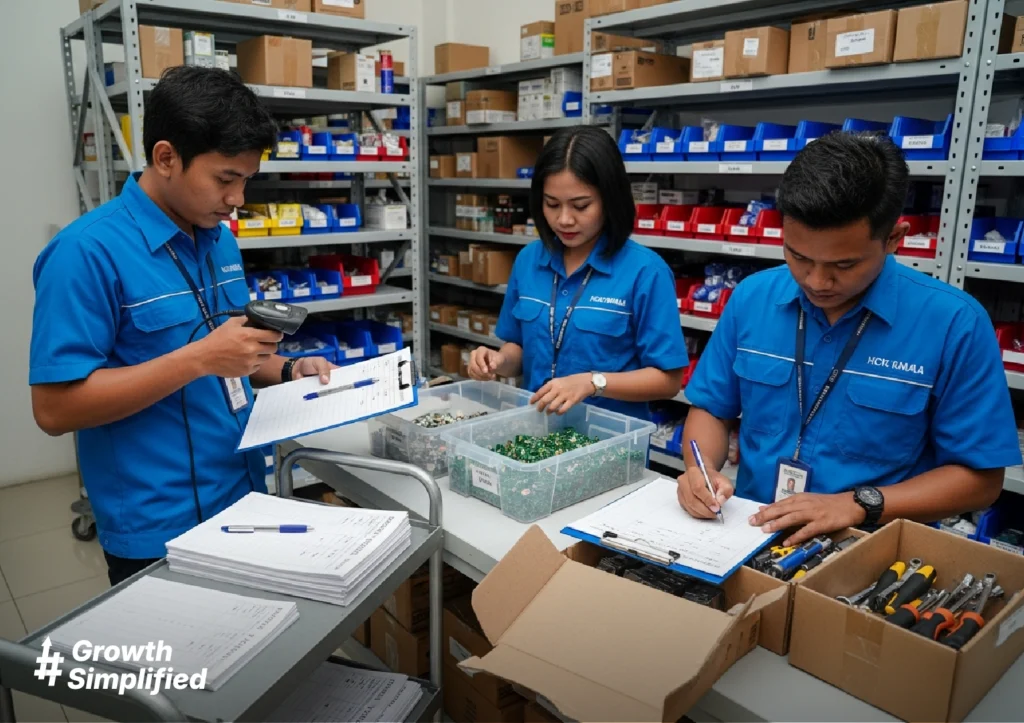
Inventory is not just products sitting in a warehouse. It represents working capital that directly affects how smoothly your operations run.
With proper inventory management, you can ensure products are always available, keep storage costs under control, and maintain smooth day-to-day operations. Here are three key reasons why.
1. Cost Control
Proper inventory management helps reduce storage costs, minimise the risk of product damage, and prevent capital from being tied up for too long. With the right stock levels, you can avoid two classic problems, namely:
- Overstocking, which means cash is tied up, storage space is consumed, and the risk of product expiry increases.
- Understocking, which leads to lost sales and disappointed customers.
In either case, it can harm your business.
2. Inventory Management Enhances Operational Efficiency
Well-organised and easily trackable inventory makes operations far more efficient. You won’t waste time searching for items, reconciling stock, or guessing which products need to be reordered.
With a clear inventory flow, the entire process—from procurement to delivery—becomes faster and less prone to errors.
3. Financial Health
Well-managed inventory helps maintain a healthy cash flow. You can anticipate demand, plan purchases more effectively, and make decisions based on accurate data. This forms the foundation for business growth without constantly needing additional capital.
Inventory Management Techniques for MSMEs
Here are some inventory management techniques you can implement, even without expensive systems or a large warehouse.
1. Manage Inventory Using ABC Classification
This technique focuses on prioritising the most important items, as not all products need to be treated the same. With ABC analysis, you can categorise inventory based on value and turnover rate, as follows:
- A – High-value, low-volume items
- B – Medium-value items
- C – Low-value, high-volume items
Category A items require the strictest attention since they involve significant capital, while category C items can be managed in bulk. This approach helps you allocate time and effort more wisely.
2. Use Cycle Counting
This method is a favourite among modern MSMEs because it’s practical and cost-effective. Instead of halting operations for a full-scale stocktake, you can perform cycle counts.
This method allows you to count a small portion of your inventory on a rotating, regular basis. Its main advantages are:
- It doesn’t disrupt daily business operations.
- Inventory data remains more accurate.
- Reduces the chances of counting errors.
- Helps identify discrepancies more quickly.
3. Implement Real-Time Inventory Tracking
In the past, only large companies could afford this technology. Now, many affordable apps allow MSMEs to monitor inventory in real time. The benefits include:
- Check stock levels per SKU anytime.
- Identify items that are running low.
- Track items from order to shelf.
- Prevent stock loss or data mismatches.
- Manage batches and expiry dates.
With just a barcode scanner or a mobile app, you can improve inventory accuracy without significant costs.
4. Use Local Warehousing to Reduce Shipping Costs
Many MSMEs don’t realise that warehouse location greatly impacts operational costs. If all inventory is stored far from demand centres, logistics expenses will inevitably be high.
By storing inventory closer to your customers, you benefit from faster deliveries, lower shipping costs, improved customer satisfaction, and reduced risk of delays.
This can be a practical solution if you sell across multiple regions.
5. Leverage Shared Warehousing
Shared warehouses offer a modern solution for MSMEs, as you only pay for the space and services you use. There’s no need to build your own warehouse or hire staff, making it far more cost-effective than operating a standalone facility.
This model allows small businesses to access facilities typically reserved for larger companies, with the main benefits being:
- Ready-to-use infrastructure.
- Professional warehouse management systems.
- High scalability, allowing you to increase or decrease capacity as needed.
- No upfront investment or major commitments required.
Labamu’s Manufacturing Management for Inventory and Production Control

Managing inventory for a growing business requires a more organised and integrated system. This is where Labamu’s Manufacturing Management provides a comprehensive solution, helping you run operations more easily, quickly, and efficiently.
Here’s why this platform can be your ideal business partner.
1. Integrated Sales Management You can track the entire sales process—from quotations and order creation to delivery. All data is directly linked to inventory and production, eliminating the need for manual recording or juggling multiple applications.
2. Accurate Production Planning You can determine which materials are needed, how much to produce, and when each task should be completed. No more overproduction or delayed schedules due to miscalculations.
3. Automated Inventory Management You no longer need to check inventory manually, as every item moving in or out is automatically recorded. You can view raw materials and finished goods anytime, accurately and effortlessly.
4. Access to Global Financing Labamu is connected to an international trade network that offers financing across more than 70 global trade corridors. This is especially helpful if you aim to expand into broader markets.
5. Maximum Operational Efficiency All processes—including production, inventory, sales, and distribution—are managed within a single platform. This helps you save time, reduce manual errors, and boost productivity.
6. Full Visibility and Control
You can monitor all business activities from a single dashboard, making it easier to make quick decisions based on real, accurate data.
With Labamu’s Manufacturing Management, you not only manage inventory more effectively but also streamline the entire production chain, boost sales, and make it easier for your business to grow.
Give Labamu a try today!